

Effective Honey Packaging Tips Jars Bottles and Eco Friendly Options
Honey can be perfectly harvested, strained, and stored, then lose its charm the moment it goes into the wrong container. A leaking lid, cloudy jar, dull label, or sticky outside can make good honey look ordinary. Good packaging does more than hold honey. It protects flavour, shows care, builds trust, and turns a simple jar into something people want to buy, keep, or give as a gift.
For hobbyists, packaging helps preserve the pride of a good harvest. For small honey businesses, it can affect repeat sales, shelf appeal, and customer confidence. The best choice is not always the fanciest one. It is the one that fits the honey, the customer, the price point, and the way the product will be stored or transported.
This guide covers practical honey packaging options, including jars, bottles, and eco-friendly alternatives. It also looks at sealing, labelling, freshness, and presentation, with tips that work whether you are bottling a few jars for family or preparing stock for a farmers’ market, shop shelf, wedding favour, or hamper.
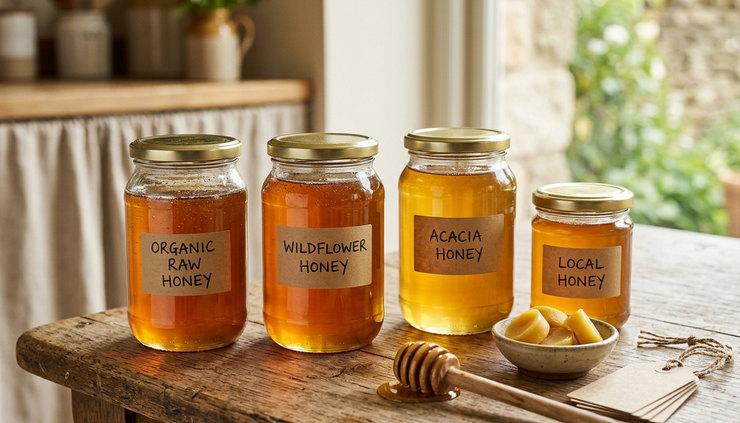
Choose the right honey container for the product and purpose
The container is the first promise your honey makes. Before anyone tastes it, they judge the colour, clarity, weight, and overall care shown in the packaging. The right container should be easy to fill, easy to seal, safe for food, and comfortable for the customer to use.
Honey also has its own needs. It is thick, sticky, and heavy for its volume. It can crystallise over time. It can absorb moisture if left exposed. That means packaging must handle weight, prevent leaks, and keep moisture out.
Glass jars give honey a premium and traditional feel
Glass jars remain one of the most popular options for honey, and for good reason. They show off the honey’s colour beautifully, from pale acacia tones to deep amber wildflower honey. Glass also gives a clean, classic feel that works well for gifting and small-batch products.
Glass is especially good for:
Raw honey
Creamed honey
Comb honey pieces packed in liquid honey
Premium gift jars
Products sold at markets, farm shops, and speciality stores
A straight-sided glass jar is easy to label and stack. A round jar gives a softer, traditional look. Hexagonal jars are common for gift packaging because they feel distinctive without being too hard to source.
The main downsides are weight and breakage. Glass adds to transport costs and needs careful packing if you sell online or deliver over long distances. In Kenya, where many small producers supply shops, hotels, roadside stalls, and local markets, glass can still work well if transport is controlled and crates are used.
Best tip for glass jars: choose lids with a reliable food-safe liner. Honey can creep into tiny gaps, so a poor lid can lead to sticky jars and unhappy customers.
Plastic bottles are practical for everyday use
Plastic squeeze bottles are convenient, light, and popular with households that use honey often. They suit customers who want honey for tea, porridge, baking, smoothies, or school snacks. A bottle with a flip-top cap also reduces mess because users can dispense honey without a spoon.
Plastic bottles work well for:
Everyday table honey
Family-size packs
Retail products where weight matters
Customers who prefer squeeze control
Outdoor use, travel packs, or catering
Clear PET bottles are common because they show the honey colour and are lighter than glass. HDPE bottles are also used, though they may be less transparent. Always use food-grade plastic designed for edible products. Avoid reusing random plastic containers, even if they look clean.
Plastic has one drawback that matters for brand perception. Some customers see it as less premium than glass. It may also be less suitable for high-end gifting unless the shape, label, and cap are carefully chosen.
Best tip for plastic bottles: leave enough headspace and avoid overfilling. Honey expands slightly with temperature changes, and a bottle filled too high may leak during storage or transport.
Squeeze bears and novelty bottles help products stand out
Bear-shaped bottles are well known in many honey markets. They are friendly, easy to recognise, and attractive to families. Other novelty bottles, such as small hexagon bottles, mini jars, and shaped gift bottles, can make honey feel special.
These containers are useful when the aim is quick recognition rather than a premium rustic feel. They can work for children’s gifts, tourist shops, hampers, and small packs sold at events.
The trade-off is labelling space. Some novelty shapes leave little room for ingredients, weight, contact details, batch information, and other required information. Before buying a large batch of shaped containers, test your label size with real printed samples.
Wide-mouth jars make thick and creamed honey easier to use
Some honey types need easy spoon access. Creamed honey, crystallised honey, honey with nuts, or honey with comb pieces all suit wide-mouth jars better than narrow bottles.
Wide-mouth jars make it easier to:
Fill without trapping air pockets
Scoop with a spoon
Add comb honey pieces neatly
Clean the rim before sealing
Present textured honey attractively
If selling crystallised or creamed honey, do not hide the texture. Make it part of the appeal. A clean glass jar with a simple label can show that the honey is naturally thick, spreadable, and full of character.
Container sizes should match buying habits
One size rarely suits all customers. A small jar can feel affordable and giftable. A larger jar gives better value to regular users. Offering two or three sizes lets customers choose without making your production too complicated.
Common practical size categories include:
Container size | Best use | Packaging note |
Small sample or favour jar | Weddings, tasting packs, hampers | Use a premium label because the small size gives little space |
Medium jar or bottle | Daily home use and market stalls | The most balanced option for price and presentation |
Large jar or bottle | Families, bakeries, regular buyers | Use strong containers and lids that handle weight well |
Small jars are lovely for gifting, but filling them takes more time per kilogram of honey. Large containers are efficient but may feel less special. A simple product range could include a small gift jar, a standard household jar, and a larger refill pack.

Use eco-friendly packaging without sacrificing quality
Eco-friendly packaging is no longer only a niche choice. Many customers notice waste, especially when buying natural foods. Honey already carries a strong connection to bees, farming, and the environment, so sustainable packaging can strengthen that message when done honestly.
The key is to choose options that protect the honey properly. A package that leaks, spoils, or breaks is not truly sustainable because it wastes the product.
Glass is reusable and widely accepted
Glass is one of the strongest eco-friendly choices for honey because it is reusable and recyclable in many places. Customers often keep attractive honey jars for spices, seeds, homemade sauces, beads, buttons, or more honey.
If using glass as part of an eco-friendly message, make reuse easy. Choose jars with common lid sizes so customers can replace lids if needed. Avoid shapes that are difficult to wash. A clean, simple jar often has a longer second life than an ornate one.
Some small producers also offer refill options. This can work well at farm gates, local markets, and trusted community supply points. If offering refills, set clear hygiene rules. Only refill clean, dry, suitable containers, and keep the filling area tidy.
Recycled and recyclable plastics can reduce waste
Plastic is not automatically the wrong choice. In some cases, lightweight plastic uses less fuel during transport and reduces breakage losses. If plastic fits your customers’ needs, look for recyclable options and make disposal guidance clear.
Use simple wording on the label if the container is recyclable. Do not make broad environmental claims that you cannot prove. Customers appreciate plain honesty more than vague green language.
A good approach is to state what is true:
The bottle is recyclable where local facilities accept this plastic
The cap should be replaced tightly after use
The container can be rinsed and reused for non-food storage if suitable
This small amount of guidance helps customers handle the packaging responsibly.
Kraft paper labels offer a natural look
Kraft paper labels pair well with honey because they feel warm, handmade, and earthy. They work especially well on glass jars, wedding favours, and farmers’ market products. A kraft label with black or dark brown text can look elegant without high printing costs.
The challenge is moisture and oil resistance. Honey jars may get sticky during filling, and paper labels can stain or lift if the jar is not cleaned properly. If using paper labels, wipe every jar thoroughly before applying the label. Let the surface dry fully.
For products that may sit in humid conditions, use labels with a protective finish or choose water-resistant stock.
Metal lids and simple closure systems are easier to recycle
A jar with a metal lid is familiar, secure, and often easier for customers to understand. It also avoids complicated mixed-material closures. For small businesses, standard lid sizes make stock control easier because one lid can fit several jar sizes.
Choose lid colours that match your product style. Gold lids feel classic and premium. Black lids can look modern and bold. White lids feel clean and simple. For a rustic look, a plain metal lid with a kraft label and twine can work well, as long as the twine does not interfere with opening.
Avoid over-packaging
Eco-friendly presentation does not mean adding more layers in natural colours. A jar wrapped in paper, tied with string, placed in a box, and packed in a bag may look charming, but it creates more material.
Use extra packaging only when it serves a purpose:
Protecting glass during transport
Turning a jar into a gift
Grouping several items in a hamper
Providing tamper evidence
Carrying information that does not fit on the label
For normal market or shelf sales, a good jar, clean label, and secure lid may be enough.
Seal, store, and handle honey to keep it fresh
Honey is known for its long shelf life, but packaging still matters. Freshness is about flavour, aroma, appearance, and customer experience. Poor handling can introduce moisture, dust, wax particles, or fermentation risk if honey is not properly processed and sealed.
Start with clean, food-safe containers. Packaging cannot fix honey that was harvested too early, strained poorly, or stored in dirty buckets. Good packaging begins before the jar.
Make sure honey is ready before filling
Honey should be mature and properly strained before packaging. If honey has too much moisture, yeasts can ferment it. Fermented honey may foam, smell sour, or push against lids. Small producers should use proper harvesting and storage practices, and when selling commercially, follow the applicable food safety and labelling requirements.
Straining helps remove wax bits, bee parts, and debris. Some customers like raw, minimally handled honey, but that does not mean dirty honey. Cleanliness protects trust.
Before filling:
Let strained honey settle so air bubbles rise
Skim foam from the top if needed
Warm honey gently only if required for flow
Avoid overheating, which can affect aroma and quality
Keep filling tools clean and dry
Never add water to honey to make it easier to pour. That harms quality and may affect safety.
Clean and dry every container
Moisture is one of honey’s biggest packaging enemies. A jar that looks dry may still hold water droplets around the base or thread. That small amount of water can affect the honey near the surface, especially if storage conditions are warm.
Before filling, inspect containers for:
Dust
Cracks or chips
Odours
Moisture
Poorly formed threads
Damaged caps or liners
If washing containers, let them dry completely. Place them upside down on a clean rack, then inspect them under good light before filling.
Fill neatly and leave the right headspace
A neat fill line makes honey look professional. It also helps with sealing and avoids sticky overflow. Too much headspace can look mean, while too little can cause leaks when temperatures rise.
Use a honey gate, food-safe jug, or filling machine depending on your scale. For hobby bottling, a bucket with a honey gate can give better control than pouring from a large container by hand. For small businesses, semi-automatic filling equipment may save time and reduce waste once volumes increase.
After filling, clean the rim before sealing. Even a thin smear of honey on the thread can stop the lid from closing properly or attract ants.
A clean rim is one of the simplest signs of careful packaging.
Choose secure lids and closures
Lids must keep moisture out and honey in. A beautiful jar with a weak lid will not survive daily use, transport, or shelf handling.
Common closure options include:
Closure type | Best suited to | What to check |
Metal twist lid | Glass jars | The liner is intact and the lid grips evenly |
Plastic screw cap | Squeeze bottles | The cap closes tightly and does not clog |
Flip-top cap | Table honey | The hinge feels firm and the opening dispenses cleanly |
Tamper band or shrink sleeve | Retail sales | It fits neatly and does not hide key label details |
Cork or decorative stopper | Gift jars only | It seals properly or acts only as decoration |
For retail honey, tamper-evident packaging can build confidence. A shrink band around the lid, a tamper strip, or a sealed cap shows that the jar has not been opened. If using heat shrink bands, apply heat carefully so you do not damage plastic bottles, labels, or the honey.
Store packaged honey away from heat and light
Once sealed, honey still needs sensible storage. Heat can darken honey over time and affect its delicate aroma. Direct sunlight can also fade labels and warm the jar unevenly.
Store packaged honey:
In a cool, dry place
Away from direct sunlight
Off the floor
Away from strong-smelling items
In cartons or crates that prevent breakage
Honey can crystallise naturally, especially some floral types. Crystallisation is not spoilage. If your honey tends to crystallise, mention this clearly on the label or a small tag. Customers are less likely to worry when they know it is natural.

Design labels that inform, reassure, and sell
A honey label has a lot of work to do. It must identify the product, provide required information, look appealing, and still be readable on a curved jar or small bottle. Good labels do not need to be expensive, but they do need to be clear.
For small producers, the label may be the main difference between a jar that looks homemade in a careless way and one that feels genuinely small-batch and trustworthy.
Put the essential information where people can find it
Customers want to know what they are buying. Retailers also need products that look complete and properly prepared.
Depending on where and how you sell, label requirements can vary. Check the relevant local food labelling rules for your market. In general, honey labels often include:
Product name
Net weight
Producer or packer name
Contact information
Batch or lot number
Best-before date if required
Storage guidance
Country or place of origin where relevant
If selling in Kenya, use metric measurements such as grams and kilograms. Keep text legible. Tiny print may fit more words, but it frustrates customers and can look less professional.
Simple product names work well. For example:
Pure Honey
Raw Wildflower Honey
Creamed Honey
Forest Honey
Honey with Comb
Only use terms you can stand behind. If the honey is blended from different sources, do not imply it came from one farm or one floral source unless that is true.
Make the front label simple
The front label should answer three quick questions:
What is it?
Who made or packed it?
What makes it special?
That last point does not need to be dramatic. It could be the floral source, location, texture, harvest style, or small-batch nature.
A clear front label might include:
The product name
Your producer name
The net weight
One short description
A simple visual mark, pattern, or illustration
Avoid crowding the front with every detail. Put longer storage notes, batch codes, and contact information on the back or side if the container size allows.
Match label material to the container
Different containers need different label choices. A label that looks perfect on a flat glass jar may wrinkle on a curved squeeze bottle. A paper label that suits a gift jar may peel if used on bottles handled with sticky fingers.
Use this quick guide:
Label material | Works well on | Watch out for |
Kraft paper | Glass jars and rustic gifts | Staining if jars are sticky |
Gloss paper | Retail jars and bottles | Glare under bright lights |
Clear film | Minimal modern packaging | Air bubbles during application |
Waterproof synthetic label | Squeeze bottles and humid areas | Higher cost |
Tag label | Gift jars and hampers | It can tear or swing awkwardly |
Always test labels on filled containers. Honey changes how packaging feels because it adds weight and warmth of colour. A label that looked large on an empty jar may look just right when filled.
Use colour to support the honey, not fight it
Honey already has a rich natural colour. Labels should frame it rather than cover it completely. If the honey is pale, dark text and soft earth tones work well. If the honey is dark, a cream, white, or kraft label can create contrast.
Gold can suggest warmth and quality, but too much gold may look overdone. Green can suggest natural origins, but use it carefully to avoid making claims the product does not support. Black and white can look clean and premium, especially with clear glass.
A good rule is to choose two main colours and one accent colour. This keeps the jar calm and easy to recognise.
Add batch information for traceability
Batch numbers may not feel exciting, but they are useful. They help track which jars came from which harvest, apiary, supplier, or packing day. If a customer reports a problem, batch information helps narrow the issue.
Batch codes can be simple, as long as the system makes sense to you. For example, a small producer may use harvest month, year, and batch sequence. Keep a written or digital record that links each batch to the source honey and packing date.
This habit is especially useful as a hobby grows into a small business. It shows discipline and makes future selling easier.
Make presentation work for markets, shelves, and gifts
Presentation is not decoration for decoration’s sake. It helps people understand value. A neat jar suggests clean handling. A thoughtful label suggests care. A well-packed gift set feels ready to give without extra effort.
Honey has a natural advantage because it looks beautiful in clear packaging. The aim is to help that beauty show.
Keep jars spotless on the outside
Sticky jars are one of the quickest ways to lose trust. Even if the honey inside is excellent, a tacky lid or smeared label makes the product feel poorly handled. It can also attract ants, dust, and dirt during storage or display.
After sealing, wipe each container with a clean damp cloth, then dry it. Pay attention to:
Under the lid edge
The jar thread
The base
The front label area
The shoulder of the jar
Do a final check before packing for delivery or display. If a jar leaks, remove it from sale until you find the cause.
Use simple props for gift packaging
Gift packaging does not need to be expensive. Honey already feels personal and generous. Small touches can make it feel ready for a birthday, wedding, holiday, corporate hamper, or thank-you gift.
Good gift additions include:
A wooden honey dipper
A small kraft tag
A cotton ribbon or natural twine
A box with shredded paper
A pair of jars with different honey types
A small note explaining the honey source
Make sure decorative items do not compromise hygiene. Keep ribbons and tags on the outside. Do not place loose decorative materials where they can stick to the lid or touch the honey.
For wedding favours, mini jars look best when the fill levels are consistent and the labels are aligned. A small jar with a crooked label can stand out for the wrong reason when placed on a table with many identical items.
Build shelf appeal with consistency
If you sell at markets or in shops, consistency matters. A display of jars with the same label position, matching lids, and tidy rows looks more reliable than a mixed group of containers. Even when using handmade labels, alignment makes a big difference.
For market tables, place a few jars at different heights using clean crates or wooden risers. Keep one open sample jar separate from sealed stock if sampling is allowed. Use clear price signs so customers do not have to ask before showing interest.
For shop shelves, think about how the jar looks from a short distance. The product name and weight should be readable. The label should not disappear behind reflections. If your honey sits beside other brands, a clear and honest design can stand out more than a busy one.
Pack safely for transport and delivery
Honey is heavy, and glass jars can break if they knock against each other. Transport packaging should protect the product without making unpacking difficult.
For local deliveries, use crates, dividers, or snug cartons. Keep jars upright. Do not stack too high unless the cartons are strong enough. For motorbike delivery, which is common in many towns, extra cushioning is wise because vibration and sudden movement can loosen poor lids or crack glass.
For shipping, wrap each glass jar and use a strong outer box. Fill empty space so jars cannot move. Add a simple upright mark where useful, but do not rely on it alone. The package should protect the honey even if handled roughly.
Plastic bottles are less likely to break, but caps can still pop open or leak. Check each cap before packing and consider tamper bands for extra security.

Plan packaging as part of the honey experience
Good honey packaging is not one thing. It is the combined effect of container, closure, label, cleanliness, storage, and presentation. When those parts work together, the product feels trustworthy and memorable.
A practical packaging plan can start with a few questions:
Where will the honey be sold?
Will customers use it daily or give it as a gift?
Does the honey need spoon access or squeeze control?
How far will it travel?
What information must fit on the label?
Can the customer reuse or recycle the container?
Does the final price still make sense?
For a hobbyist, the answer may be a clean glass jar, a neat kraft label, and a tight lid. For a small business, the answer may be a core range with standard jars, tamper-evident seals, batch-coded labels, and gift packaging for special occasions.
The container should also suit the honey’s personality. A dark, bold forest honey looks wonderful in a clear glass jar with a cream label. A light, floral honey may shine in a tall bottle that catches the light. Creamed honey feels inviting in a wide-mouth jar with a simple spreadable-honey note. Comb honey deserves packaging that lets people see the comb clearly.
Presentation matters because honey is both food and feeling. It can be breakfast, medicine cabinet staple, baking ingredient, souvenir, wedding favour, or thank-you gift. The same honey can feel everyday or special depending on how it is packed.
A reliable lid prevents leaks. A clear label builds trust. A clean jar shows care. Eco-friendly choices tell customers you thought beyond the sale. When all of these details come together, packaging protects the honey and helps people appreciate the work behind it.

The best packaging method is the one that keeps honey fresh, makes it easy to use, and presents it with honesty. Start with clean food-safe containers, match the jar or bottle to the purpose, seal every pack carefully, and use labels that give clear information without clutter. From there, small presentation choices can turn good honey into a product people remember, recommend, and gladly gift.


Comments