

Bee Farming in Southern Africa Climate, Benefits, and Beginner Tips
A healthy hive can turn a dry-looking hillside, a citrus orchard, or a patch of miombo woodland into a working source of food, income, and pollination. That is one reason bee farming has become such a practical rural enterprise across Southern Africa.
The region is well suited to beekeeping, but not in one simple way. The Cape’s winter rains are very different from Zambia’s miombo season, Namibia’s dry savanna, or Mozambique’s warmer coastal zones. Bees respond to all of it: rainfall, heat, wind, flowering trees, crop cycles, and the care of the beekeeper.
Bee farming in Southern Africa is also more than honey. It supports orchards, seed production, natural vegetation, small businesses, and community projects. For beginners, it can start with a few hives and basic equipment. With good management, it can grow into a steady livelihood.

Southern Africa gives bees many climates and flowering seasons
Southern Africa is not one beekeeping environment. It is a patchwork of climates, and that patchwork can work in a beekeeper’s favour.
Some areas have summer rainfall, with strong flowering after the first rains. Others, especially the south-western Cape, have winter rainfall and a different flowering rhythm. Coastal zones can stay warmer and more humid. Inland highlands can have cold nights and dry winters. Semi-arid areas may look harsh, but they can produce strong nectar flows after good rains.
This variety matters because bees need three things to thrive:
Nectar for energy and honey production
Pollen for protein, brood rearing, and colony growth
Water for cooling the hive and feeding larvae
When those resources appear at the right time, colonies expand quickly. When drought, fire, overgrazing, or poor forage reduces flowering, colonies shrink or migrate.
The main bee types in the region
Southern Africa is home to African honey bees, which are well adapted to local conditions. In much of the region, beekeepers work with Apis mellifera scutellata, often called the African savanna honey bee. In parts of the Cape, Apis mellifera capensis, the Cape honey bee, is found.
These bees are productive and hardy, but they can be more defensive than some European strains. That does not make them unsuitable for beekeeping. It means management must be calm, careful, and well timed.
A beginner should learn from a local beekeeper before opening hives alone. Good handling reduces stinging, keeps colonies calmer, and protects neighbours, livestock, and the beekeeper.
Important honey plants and forage sources
The best beekeeping sites have a mix of wild plants and farm crops. Bees need food across the year, not only during one short flowering event.
Common nectar and pollen sources across the region include:
Forage source | Where it matters | Why bees use it |
Miombo woodland trees | Zambia, Zimbabwe, Malawi, Mozambique, Angola | Seasonal flowering can support strong honey flows |
Acacia, now often classified as Vachellia and Senegalia | Savanna and semi-arid zones | Good nectar and pollen in many areas |
Mopane | Dry woodland regions | Useful forage in suitable seasons |
Fynbos plants | Western and southern Cape | Supports distinctive honey types and diverse pollinators |
Eucalyptus | Farms, plantations, towns, and roadsides | Often flowers heavily, though it is not native |
Citrus | South Africa, Zimbabwe, Mozambique, Eswatini | Supports bees and benefits from pollination |
Sunflower and canola | Commercial farming areas | Can provide strong seasonal nectar and pollen |
Macadamia and avocado | Warmer production zones | Pollination services are valuable for growers |
Aloe and wildflowers | Dry and mixed habitats | Useful forage during leaner periods in some areas |
No single plant makes a perfect apiary. The strongest sites offer succession, meaning one plant starts flowering as another finishes. This helps colonies avoid long food gaps.
Rainfall shapes the beekeeping calendar
In summer rainfall areas, the first rains often trigger flowering and colony build-up. Beekeepers may need to inspect hives before the main flow, add space for honey, and prepare for swarming.
In winter rainfall areas, the timing shifts. Colonies may build at a different point in the year, depending on local plants and temperatures.
In dry zones, beekeeping can still work, but hive placement becomes more sensitive. Bees may need nearby water, shade during extreme heat, and access to reliable forage within flying distance.
A useful rule is simple: follow the flowers, not the calendar alone. Two farms in the same district can perform differently if one has flowering trees, water, and shelter, while the other is exposed and overgrazed.
Bee farming supports ecosystems, farms, and rural incomes
Bees are best known for honey, but their wider value comes from pollination. As they move from flower to flower, they transfer pollen and help plants set seed and fruit.
That service supports both wild ecosystems and farms. In Southern Africa, where smallholder fields, orchards, rangelands, plantations, and natural vegetation often sit close together, strong pollinator activity can benefit many parts of the local food system.
Bees help farms produce better crops
Many crops do better when pollinators visit their flowers. The exact benefit depends on the crop, variety, weather, and other pollinators present, but bees are widely used in fruit, nut, seed, and vegetable production.
Pollination is especially relevant for:
Avocado
Macadamia
Citrus
Sunflower
Canola
Cucurbits such as pumpkins, melons, and cucumbers
Some seed crops
Various orchard fruits
A beekeeper near farming areas may earn from honey, wax, and pollination services. A farmer may benefit from better fruit set and more even production. When managed well, both sides gain.
The timing needs care. Pesticides can kill bees or weaken colonies. Farmers and beekeepers should agree on hive placement, spray schedules, and safe products. Spraying at night, avoiding application during flowering, and giving beekeepers advance warning can reduce harm.
Bees support wild plants and biodiversity
Honey bees are not the only pollinators in Southern Africa. The region also has many wild bees, butterflies, flies, beetles, birds, and bats that pollinate plants. Good beekeeping should protect this wider pollinator community.
Well-managed hives can support ecosystems when they are part of a healthy environment. Beekeepers have a direct reason to protect flowering trees, avoid unnecessary burning, conserve water sources, and limit pesticide exposure.
That can shift how communities value natural vegetation. A woodland is not only fuelwood or grazing land. It is also a living honey source.
A strong apiary begins outside the hive. Flowers, clean water, shade, and low chemical pressure matter as much as the box the bees live in.
There is also a caution. Too many managed hives in a sensitive area can increase competition with wild pollinators. In conservation areas, beekeepers should follow local rules and avoid placing large apiaries where they could disturb wildlife or rare plants.
Honey adds income without clearing land
One of the strengths of bee farming is that it can produce value from standing vegetation. In many rural areas, that matters.
A beekeeper does not need to plough a large field to start. Hives can sit along farm boundaries, near woodland, in orchards, or on communal land where local agreements allow it. Honey, beeswax, propolis, and sometimes queen rearing or pollination services can become income streams.
Bee farming can fit alongside:
Cropping
Livestock keeping
Fruit production
Agroforestry
Community forest projects
School or youth agricultural clubs
It also creates small business opportunities beyond the apiary. People may earn from carpentry, hive making, honey processing, packaging, transport, training, or local retail.

Beginners should start small and learn the local season
A new beekeeper does not need dozens of hives. Starting with two to five hives is often wiser. It gives room to learn without making every mistake expensive.
Bee farming rewards observation. A beekeeper needs to watch flowers, weather, hive activity, pests, and colony strength. Books and videos help, but local experience is better because bees follow local conditions.
Choose the right site
Good hive placement can prevent many problems. A suitable apiary site should have forage, water, safety, and access.
Look for a place with:
Flowering plants within a practical flying range
Clean water nearby, or space to provide water
Morning sun and some afternoon shade in hot areas
Protection from strong wind
Dry ground that does not flood
A clear flight path away from homes, paths, schools, and livestock kraals
Access for inspections and honey harvesting
Permission from the landowner or community authority
Keep hives away from places where people or animals pass close to the entrance. Bees defend the front of the hive most strongly, so face entrances away from regular movement.
In areas with honey badgers, hives need strong stands and protection. In areas with ants, stands may need grease bands, water moats, or other local ant barriers. In hot, dry regions, shade can stop comb from overheating, but too much damp shade can create other problems.
Pick a suitable hive type
Several hive types are used in Southern Africa. The best choice depends on budget, skills, training, and market goals.
Langstroth hives are common in commercial and semi-commercial beekeeping. They use removable frames, which makes inspections, disease checks, and honey extraction easier. They cost more than simple hives, but they support better management.
Top-bar hives can be cheaper and easier to make locally. Bees build comb from bars laid across the top. They are useful for small-scale beekeeping, though honey harvesting must be careful to avoid destroying brood comb.
Traditional log or bark hives are used in some areas, but they can make inspection and sustainable harvesting harder. In places where bark stripping harms trees, modern alternatives are better for both bees and woodland.
For most beginners who want to grow, a removable-frame hive is a strong option. It allows careful colony checks and cleaner honey handling.
Basic equipment for a beginner
A small starter kit should focus on safety, hive management, and clean harvesting.
Essential equipment includes:
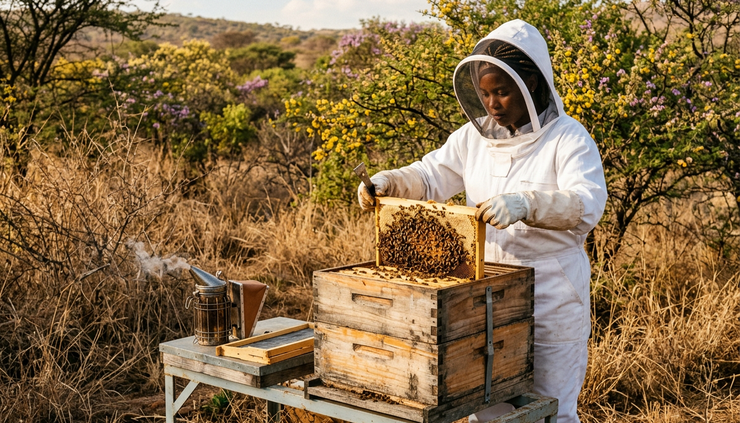
Bee suit or protective jacket with veil
Gloves suited to beekeeping
Closed shoes or gumboots
Smoker
Hive tool
Bee brush
Hives with frames or top bars
Hive stands
Feeder, if used during dearth periods
Clean buckets with lids
Honey strainer or filter
Food-grade storage containers
Notebook or simple record sheet
Useful extras include:
Queen excluder, where appropriate
Uncapping knife for frame hives
Honey extractor for larger operations
Wax processing pot or solar wax melter
First aid kit
Ant and honey badger protection materials
Protective gear matters. Confident beekeepers still get stung, but a good suit helps keep inspections calm. A smoker also helps, when used correctly. Cool smoke masks alarm signals and encourages bees to move down into the hive.
Get bees legally and responsibly
Beginners can obtain bees by attracting swarms, buying colonies, or working with an experienced beekeeper who splits strong colonies. Rules vary by country and district, so check local veterinary, agricultural, or extension guidance before moving colonies.
Avoid moving bees from unknown sources over long distances. This can spread pests and diseases. It can also introduce bees poorly suited to the area.
A bait hive, sometimes called a swarm trap, may attract a natural swarm during swarming season. It should be checked often and moved carefully once occupied. The new colony then needs time to build comb and strength before any honey is taken.
Good management keeps colonies productive and safe
A hive is not a box to leave alone until harvest. Bees can survive with little help, but farming them well takes regular attention.
The goal is not to disturb the colony every few days. The goal is to inspect with purpose, understand what is happening, and act at the right time.
Inspect at the right times
Open hives during calm weather, usually in warm daylight when many foragers are out. Avoid inspections during storms, cold spells, or late evenings. Bees tend to be more defensive when conditions are poor.
During an inspection, check for:
Eggs, larvae, and sealed brood
Enough food stores
Space for the queen to lay
Space for nectar and honey
Signs of pests
Damaged comb
Queen cells, which may show swarming plans
Unusual smell or dead brood
A beginner does not always need to see the queen. Fresh eggs and healthy brood patterns often show that she is present and laying.
Keep inspections short. Prepare tools first, use smoke gently, and avoid crushing bees. Rough handling makes colonies defensive.
Manage swarming without fighting the bees
Swarming is natural. It is how honey bees reproduce at colony level. In Southern Africa’s favourable seasons, strong colonies can build fast and prepare to swarm.
For beekeepers, swarming can reduce honey production because many worker bees leave with the old queen. Some swarms may also settle in buildings or unsafe places.
Good swarm management includes:
Adding space before the hive becomes crowded
Keeping young, productive queens where queen management is practised
Splitting strong colonies at the right time
Removing old dark comb in managed systems
Watching for queen cells during build-up periods
The aim is not to stop every swarm. The aim is to reduce preventable colony loss and keep bees where they can be managed safely.
Feed only when it helps
Feeding can support colonies during drought, after moving, or when establishing a new swarm. It should not replace good forage.
Sugar syrup can help bees survive a nectar shortage, but it should be used carefully. Feeding during a honey flow can affect honey purity if syrup gets stored in supers meant for harvest. Poor feeding practices can also start robbing, where bees attack weaker colonies for food.
Pollen supplements may be used in some operations, but beginners should first focus on forage-rich sites and good timing.
Clean water is often overlooked. Bees use water to cool the hive. In dry areas, provide shallow water with stones, sticks, or floats so bees can land safely.
Control pests and protect hives
Southern African beekeepers may deal with several challenges:
Ants
Ants can stress or even drive out a colony. Keep hive stands clean and use local ant barriers where needed.
Wax moths
Wax moths damage weak colonies and stored comb. Strong colonies usually defend themselves well. Store empty comb properly and avoid leaving dead-out hives unattended.
Hive beetles
Small hive beetles can be a problem, especially in weak colonies. Good hygiene, strong colonies, and avoiding excess empty space help.
Honey badgers
Honey badgers can destroy hives while searching for honey and brood. Raise hives on secure stands and use strong protective methods common in the area.
Pesticides
Chemical exposure can kill foragers or weaken a colony slowly. Build relationships with nearby farmers and agree on safe spraying practices.
Harvest honey without harming the colony
Good honey harvesting keeps bees alive and honey clean.
Harvest only ripe, capped honey from strong colonies. Leave enough stores for the bees, especially before dry or cold periods. Taking too much can weaken or kill the colony.
Use clean, food-grade containers. Keep smoke, dust, dead bees, and old brood comb away from harvested honey. Strain honey gently and store it in sealed containers.
For small-scale sellers, clean handling builds trust. Honey buyers notice flavour, clarity, moisture, and packaging. Local honey can earn loyalty when it is clean, honest, and traceable.
Be careful with claims. Honey varies by season and forage, and it should not be sold with unverified medical promises. Let quality, taste, and source speak for themselves.
Local success stories show what bee farming can do
Across Southern Africa, bee farming has become part of community development, conservation, and farm income. The exact models vary, but the pattern is clear: when people receive training, access to equipment, and reliable markets, beekeeping can strengthen local economies.
Woodland beekeepers protect trees because trees feed bees
In miombo woodland areas of countries such as Zambia, Zimbabwe, Malawi, and Mozambique, honey production often links closely to forest health. Beekeepers depend on flowering trees, so there is a direct reason to limit destructive harvesting and uncontrolled fires.
Community beekeeping groups in these regions often work with simple hive technologies, local carpenters, and collective honey marketing. The benefits go beyond individual income. Beekeeping can support school fees, household purchases, and village savings groups.
The success comes from a practical shift. Trees become more valuable standing than cut. Honey becomes a reason to care for woodland.
Women’s groups turn honey into household income
In many rural projects, women’s groups have used beekeeping as a small enterprise alongside farming, poultry, vegetable production, or craft work. The work can be organised around shared apiaries, group-owned equipment, or collective processing.
This model helps reduce the cost barrier. Not every member needs to buy an extractor or processing equipment alone. Groups can share tools, pool harvests, and negotiate better with buyers.
The community impact can be steady rather than dramatic. Income from honey may help with food, uniforms, farm inputs, or savings. Training also builds technical confidence, especially when local mentors support new beekeepers through the first seasons.
Farmers use hives to improve pollination and diversify income
In fruit, nut, and seed-growing areas, some farmers keep their own hives or work with beekeepers who provide pollination services. This helps link crop production and beekeeping more closely.
For example, an orchard grower may host hives during flowering. The beekeeper gains forage and possible pollination income. The farmer gains more pollinator activity when flowers need it most.
This arrangement works best when both sides plan early. Hives should arrive when bloom begins, not after peak flowering. Farmers should avoid harmful sprays during bloom and communicate clearly about any crop protection work.
Youth projects make beekeeping a practical skill
Beekeeping also suits youth agriculture programmes because it teaches biology, business, carpentry, record keeping, and environmental care in one activity.
A small school or youth-group apiary can show how flowers, insects, weather, and food systems connect. It can also lead to small enterprises such as candle making, lip balm production, or packaged honey, where regulations allow.
The best youth projects include strong supervision. Bees are livestock, and safety matters. With training and proper sites, young people can learn a skill that does not always require owning large land.

A practical first-year plan for new beekeepers
A beginner’s first year should focus on learning, not rushing for a large honey harvest. Bees need time to settle, build comb, and grow strong.
Here is a simple plan that works in many areas, with timing adjusted to the local flowering season.
Learn before buying equipment
Spend time with an experienced beekeeper or extension officer. Watch hive inspections, harvesting, and colony transfers. Learn how bees behave in your area.
Ask practical questions:
Which months are best for baiting swarms?
Which plants produce the main honey flow?
What pests cause the most trouble?
What hive type is common locally?
Where do beekeepers sell honey?
Are there local rules on hive registration or bee movement?
Good local advice saves money.
Start with a small number of hives
Two to five hives are enough for learning. One hive alone can be risky because if it fails, there is no comparison. With a few hives, a beginner can see which colony is strong, which is weak, and how conditions affect them.
Keep records from the start. A notebook can track:
Date of inspection
Hive strength
Brood pattern
Food stores
Queen signs
Pest signs
Weather and flowering plants
Actions taken
Harvest details
Records turn guesses into learning.
Build strong colonies before taking honey
A new colony needs comb, brood, and food stores. If a beekeeper harvests too early, the colony may collapse or abscond.
Early signs of good progress include steady forager traffic, pollen entering the hive, expanding brood, and comb building. Honey should only be taken when the colony can spare it.
Patience pays. A strong second-season colony often performs better than a first-season colony that was pushed too hard.
Find a market before the first harvest
Honey is easier to sell when quality and trust are clear. Local buyers often want to know where honey comes from and whether it is pure.
Possible markets include:
Local shops
Farmers’ markets
Neighbours and community networks
Bakeries and food processors
Cooperatives
Tourist lodges and farm stalls
Bulk honey buyers
Packaging matters, but honesty matters more. Label honey clearly according to local requirements. Do not mix honey with syrup or sell unripe honey. Poor-quality honey harms the whole local beekeeping market.
Keep safety central
Bees and people can live near one another, but poor hive placement creates conflict. Put hives away from homes, schools, busy footpaths, and livestock areas. Mark the apiary and inform nearby people when inspections or harvests are planned.
Anyone with known severe sting allergies should not work bees without medical guidance and emergency planning. Keep a first aid kit nearby, and work with another person when possible.
Calm beekeeping is safer beekeeping. Move slowly, avoid strong perfumes, do not bang hive parts, and close hives properly after inspections.
The future of bee farming in Southern Africa is local and practical
Bee farming fits Southern Africa because it works with the region’s strengths: diverse flowering plants, adaptable bees, farming communities, and landscapes where conservation and income often need to support each other.
The best results come from local knowledge. A beekeeper in the Cape cannot use the same calendar as one in Malawi’s miombo woodland or Namibia’s dry savanna. The plants, rain, pests, and markets differ. The principles remain the same: protect forage, keep strong colonies, manage safely, harvest cleanly, and build trust with buyers and farmers.
For beginners, the next step is simple. Visit a working apiary, learn the local flowering season, and start small with the right equipment. A few well-managed hives can teach more than a large neglected apiary.
When bees thrive, the benefits spread. Crops set better. Wild plants reproduce. Households earn extra income. Communities gain a reason to protect trees and flowering habitats. That is the real promise of bee farming in Southern Africa: small insects helping people and ecosystems work together.


Comments