

Most Popular Flowers to Grow How to Plant and Care for Them
A good flower garden does not start with rare plants. It starts with dependable favourites that nurseries, florists, and growers sell year after year because they perform well, look beautiful, and suit many uses.
The most common commercial flowers include roses, chrysanthemums, carnations, lilies, gerberas, orchids, sunflowers, marigolds, petunias, and gladiolus. Some are grown mainly for cut flowers. Others shine in garden beds, borders, pots, and hanging baskets. A few do both.
The real trick is not just choosing the right flower. It is matching each plant to the right soil, water routine, sunlight, and pest control plan. Once those basics are right, even a small space can produce colour for months.

The most common commercial flowers and why gardeners love them
Commercial growers favour flowers that are attractive, transport well, bloom reliably, or sell easily as potted plants. Home gardeners benefit from the same traits. These plants are usually easier to find, better understood, and supported by plenty of growing advice.
Here are the popular varieties most often seen in flower markets, garden centres, supermarkets, and florist arrangements.
Flower | Common commercial use | Best for home gardens | General difficulty |
Roses | Cut flowers, landscaping, potted plants | Beds, borders, hedges, containers | Moderate |
Chrysanthemums | Cut flowers, potted colour | Borders, pots, seasonal displays | Easy to moderate |
Carnations | Cut flowers, borders | Pots, edging, raised beds | Moderate |
Lilies | Cut flowers, bulbs | Beds, containers, feature planting | Moderate |
Gerbera daisies | Cut flowers, potted plants | Pots, sunny beds, patio colour | Moderate |
Orchids | Potted plants, floristry | Indoor pots, shaded patios | Moderate to advanced |
Sunflowers | Cut flowers, seed production | Beds, back borders, children’s gardens | Easy |
Marigolds | Bedding plants, borders | Edging, vegetable gardens, containers | Easy |
Petunias | Bedding plants, hanging baskets | Pots, baskets, ground cover | Easy |
Gladiolus | Cut flowers, corms | Seasonal beds, cutting gardens | Easy to moderate |
Alstroemeria | Cut flowers | Borders, containers in mild climates | Moderate |
Tulips | Cut flowers, bulbs | Cool gardens, containers, seasonal displays | Moderate to advanced in warm areas |
Some flowers, such as roses and chrysanthemums, grow well in many regions with the right care. Others need more specific conditions. Tulips, for example, prefer cool conditions and may need pre-chilled bulbs in warm areas. Orchids need airy growing media rather than ordinary garden soil.
For most home gardens, the easiest starting point is a mix of marigolds, petunias, sunflowers, chrysanthemums, and roses. They offer quick rewards, strong colour, and useful lessons in watering, pruning, and feeding.
Roses remain the classic commercial flower
Roses are among the most recognised flowers in the world. Florists sell them as cut stems, while nurseries sell them as bushes, climbers, miniatures, and standards.
They need:
Full sun for at least 6 hours per day
Rich, well-drained soil
Regular watering at the root zone
Pruning to remove dead, weak, or crossing stems
Good airflow to reduce fungal disease
Roses suit gardeners who are ready to inspect plants often. Aphids, black spot, mildew, and thrips can appear fast, especially in humid or crowded gardens.
Chrysanthemums give generous seasonal colour
Chrysanthemums, often called mums, are sold as cut flowers and potted plants. They produce many blooms and come in button, spray, daisy, pompon, and decorative forms.
They prefer:
5 to 6 hours of sun daily
Fertile, well-drained soil
Regular pinching when young for bushier growth
Even watering without soggy roots
Experienced gardeners can control shape and bloom timing by pinching tips and spacing plants well. Beginners can simply plant healthy nursery seedlings and remove faded flowers to encourage fresh buds.
Carnations are long-lasting and fragrant
Carnations are popular with florists because cut stems last well. In the garden, they grow best in sunny spots with light, well-drained soil.
They dislike waterlogged roots. If the soil is heavy, add compost and coarse sand, or plant them in raised beds or containers. Remove faded flowers often, as this keeps the plant producing new blooms.
Lilies make dramatic garden features
Lilies grow from bulbs and produce tall stems with bold flowers. Asiatic lilies are usually easier to grow than some highly perfumed Oriental types.
They need:
Sun on the upper plant
Cool, moist soil around the roots
Deep, loose planting soil
Support for tall stems in windy areas
A useful method is to plant low-growing annuals around lilies. These shade the soil while letting the lily stems reach the light.
Gerberas bring bright, clean colour
Gerbera daisies have large, bold flowers in red, orange, yellow, pink, white, and cream. They are common in bouquets and also popular as potted plants.
They need bright light, free-draining soil, and careful watering. Wet crowns can rot, so water the soil directly rather than pouring water over the centre of the plant.
Orchids are different from ordinary garden flowers
Most commercial orchids sold as houseplants, especially Phalaenopsis, do not grow in normal soil. They need bark chips, coco husk, charcoal, or a loose orchid mix that allows air around the roots.
They prefer:
Bright, indirect light
Good humidity
Watering only when the potting mix begins to dry
Air movement without cold draughts
Orchids reward patience. Many grow slowly, but a healthy plant can flower again when light, watering, and feeding are balanced.
Sunflowers are easy and rewarding
Sunflowers grow fast from seed, making them excellent for beginners. They need full sun, deep soil, and enough space. Tall varieties may need staking.
For cut flowers, choose branching or pollenless types if available. For wildlife and seed harvest, choose open-pollinated seed-producing types.
Marigolds are tough garden workhorses
Marigolds are among the easiest flowers to grow. They tolerate heat, bloom freely, and fit well in borders, pots, and vegetable gardens.
They need full sun and moderate water. Too much fertiliser can produce leafy plants with fewer flowers, so feed lightly.
Petunias are perfect for pots and baskets
Petunias are sold widely as bedding plants because they flower heavily and trail beautifully from containers. They need sun, feeding, and regular deadheading for the best display.
Modern varieties can flower for long periods. In rainy periods, remove damaged blooms to prevent rot and keep the plant tidy.
Gladiolus produce excellent cutting stems
Gladiolus grows from corms and sends up tall spikes of flowers. Plant corms in batches every 2 weeks for a longer harvest.
They like full sun, loose soil, and steady moisture while growing. Tall spikes may need support, especially in windy gardens.

How to prepare soil before planting flowers
Soil preparation decides how well flowers settle in. Many failures blamed on “bad seedlings” actually start with poor drainage, compacted soil, or weak nutrition.
Most flowering plants prefer soil that is:
Loose enough for roots to spread
Well drained but not dry and dusty
Rich in organic matter
Slightly acidic to neutral for many common flowers
Free from weeds and large stones
A simple soil test helps. Dig a small hole about 30 cm deep and look at the texture.
If the soil forms a hard sticky ball, it has a lot of clay. It may hold too much water. Add compost and plant in raised beds if drainage is poor.
If the soil falls apart like dry sand, it drains quickly and may lack nutrients. Add compost, well-rotted manure, leaf mould, or coco peat to improve water holding.
If the soil smells sour or stays wet for days, improve drainage before planting. Most commercial flowers hate sitting in stagnant water.
Build a better flower bed step by step
For a new bed, clear grass and weeds first. Remove roots of persistent weeds, not just the top growth.
Then prepare the soil:
Loosen the ground to a depth of 25 to 30 cm.
Mix in 5 to 8 cm of compost or well-rotted manure.
Break large clods into smaller pieces.
Level the bed without compacting it.
Water lightly and let it settle for a few days before planting, if time allows.
For roses and lilies, dig deeper. Their roots or bulbs perform better when the soil is loose below the planting zone.
For containers, avoid using plain garden soil alone. It can become compacted in pots. Use a good potting mix with compost, drainage material, and some moisture-holding matter. Make sure every container has drainage holes.
Match soil to the flower type
Flower group | Best soil condition | Useful tip |
Roses | Rich, deep, moist but drained | Add compost before planting and mulch afterwards |
Chrysanthemums | Fertile and well drained | Pinch young plants for fuller growth |
Carnations | Light and sharply drained | Raise beds if the ground holds water |
Lilies | Loose, deep, humus-rich | Keep bulbs cool with mulch or low plants |
Gerberas | Free-draining and slightly loose | Keep the crown above soggy soil |
Orchids | Bark-based or airy mix | Never pack roots into heavy soil |
Sunflowers | Deep and moderately fertile | Avoid too much nitrogen |
Marigolds | Average, drained soil | Overfeeding reduces blooms |
Petunias | Fertile potting mix | Feed containers regularly |
Gladiolus | Loose, fertile, well drained | Plant corms deeply enough for support |
Use compost wisely
Compost improves almost every flower bed. It feeds soil life, improves texture, and helps roots access moisture.
Still, more is not always better. Fresh manure can burn roots and encourage soft leafy growth. Use only well-rotted manure. If compost is not fully broken down, apply it as a surface mulch rather than mixing it directly around delicate roots.
For experienced gardeners, soil improvement can go further:
Add leaf mould for moisture retention.
Use coarse sand or fine gravel in small amounts for drainage-loving flowers.
Rotate annual flower beds to reduce disease build-up.
Mulch with dry grass, wood chips, or composted bark, keeping mulch away from stems.
Healthy soil should feel alive, crumbly, and easy to work. If roots can breathe, drain, and feed, flowers have a strong start.
How to plant popular flowers the right way
Good planting reduces stress. A plant that goes into the ground at the right depth, with firm soil contact and enough water, starts growing faster.
The best time to plant depends on local weather. In many parts of Kenya, planting just before or early in the rainy season can help new plants establish. In cooler highland areas, some flowers enjoy milder conditions. In hotter lowland areas, morning planting and afternoon shade for young transplants can prevent shock.
Planting nursery seedlings
Most beginners start with seedlings from a nursery. Choose compact plants with green leaves, no yellowing, and no visible pests under the leaves.
To plant seedlings:
Water the seedling tray or pot before planting.
Dig a hole slightly wider than the root ball.
Remove the plant gently without pulling the stem.
Place it at the same depth it grew in the pot.
Firm soil around the roots.
Water slowly at the base.
Do not bury stems too deeply unless the plant type benefits from it. Many flowers rot when soil covers the crown.
For spacing, read the plant label if available. If not, allow enough room for airflow. Crowded plants may look full at first, but they attract mildew, aphids, and fungal spots later.
Planting seeds
Sunflowers, marigolds, zinnias, cosmos, and some petunias can grow from seed. Seeds are cheaper than seedlings and give more variety.
A simple rule works for many seeds: plant at a depth about two to three times the seed’s thickness. Very fine seeds may need only light pressing into the surface.
Keep the seedbed moist, not flooded. Once seedlings emerge, thin them so the strongest plants remain. Thinning feels wasteful, but crowded seedlings grow weak and compete for light.
Planting bulbs, corms, and tubers
Lilies, gladiolus, and tulips grow from underground storage organs. They need the correct planting depth.
General guidance:
Plant bulbs with the pointed end facing up.
Plant most bulbs about two to three times as deep as their height.
Place gladiolus corms deeper in windy areas for better anchorage.
Water after planting, then avoid soaking the bed before growth starts.
Tulips are a special case in warm climates. They often need chilling before planting and may not return strongly each year. Treat them as seasonal colour if conditions are not cool enough.
Planting roses
Roses need more care at planting because they stay in place for years.
Choose a sunny position with good airflow. Dig a wide hole and mix compost into the removed soil. Place the rose so the root system spreads naturally. Backfill, firm gently, and water deeply.
After planting, mulch around the base. Keep mulch a few centimetres away from the main stem to prevent rot.
For container roses, use a large pot. Small containers dry too fast and restrict roots.
Watering, sunlight, and feeding for strong blooms
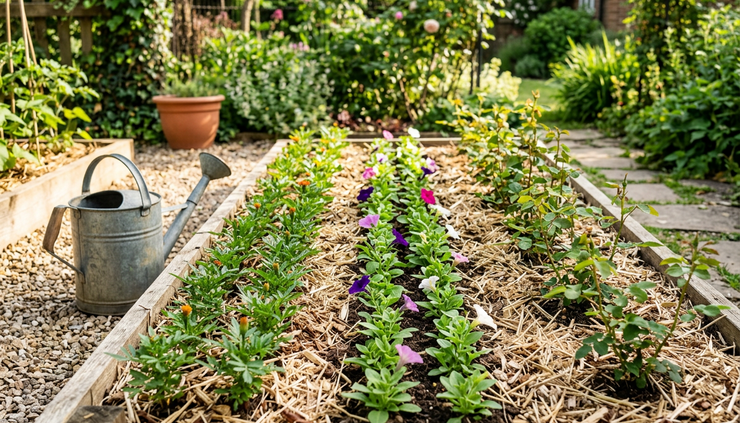
Flowers need enough water to grow, but too much water harms roots. The best routine depends on the plant, soil, container size, weather, and stage of growth.
A reliable approach is to check soil moisture before watering. Push a finger 2 to 3 cm into the soil. If it feels dry at that depth, water. If it feels damp, wait.
Water deeply rather than lightly
Light daily sprinkling encourages shallow roots. Deep watering encourages roots to grow down, where soil stays cooler and moister.
For garden beds, water slowly until the root zone is wet. For pots, water until excess drains from the bottom. Empty saucers if water collects there, especially for plants that dislike wet feet.
Best watering times:
Early morning is ideal.
Late afternoon can work if leaves dry before night.
Midday watering wastes more water through evaporation.
Night watering can increase fungal problems in humid weather.
Try to water the soil, not the leaves. This matters for roses, chrysanthemums, gerberas, and petunias, which can suffer from leaf spots and mildew.
Know each flower’s sunlight needs
Most commercial flowering plants bloom best in sun. A sunny bed gives stronger stems and more flowers.
Flower | Sunlight requirement | What to watch for |
Roses | Full sun, at least 6 hours | Too much shade reduces flowers |
Chrysanthemums | Full sun to light shade | Strong shade makes stems leggy |
Carnations | Full sun | Humid shade can cause disease |
Lilies | Sun or light shade | Roots prefer cool soil |
Gerberas | Bright sun with some afternoon relief in hot areas | Harsh heat can wilt blooms |
Orchids | Bright indirect light | Direct hot sun can scorch leaves |
Sunflowers | Full sun | Shade causes leaning and weak stems |
Marigolds | Full sun | Too much shade reduces flowering |
Petunias | Full sun | Shade reduces bloom volume |
Gladiolus | Full sun | Stems weaken in shade |
Alstroemeria | Sun to partial shade | Heat stress can reduce flowering |
Tulips | Cool sun | Warm soil shortens bloom life |
In hot, dry regions, plants in containers may need morning sun and light afternoon shade. In cooler or highland areas, more sun usually improves bloom quality.
Feed for flowers, not just leaves
Flowering plants need nutrients, but too much nitrogen creates lush leaves at the expense of blooms.
Use compost as the base. Then add a balanced flower fertiliser according to the label. For pots and hanging baskets, feeding matters more because nutrients wash out with watering.
Practical feeding tips:
Feed roses during active growth and flowering.
Feed petunias and container plants more often, but lightly.
Avoid heavy feeding of marigolds in rich soil.
Stop forcing weak or diseased plants with fertiliser. Fix water, roots, or pests first.
Water before applying granular fertiliser to reduce root burn.
Experienced gardeners can use bloom-supporting feeds with more potassium once plants are established. Beginners can succeed with compost plus a general flower feed used carefully.
Prune, pinch, and deadhead
Flower care is not only watering and feeding. Small cuts make a big difference.
Pinching means removing the growing tip of a young plant. It encourages side shoots and fuller plants. Chrysanthemums, petunias, and carnations often respond well.
Deadheading means removing faded flowers. This stops the plant from putting energy into seed production. Marigolds, petunias, roses, and gerberas bloom better when old flowers are removed.
Pruning is heavier cutting to shape the plant or remove old wood. Roses need regular pruning to stay productive. Always use clean, sharp secateurs.
For cutting gardens, harvest flowers early in the morning. Place stems in clean water immediately. Cut above a leaf node so the plant can produce new growth.
Pest control and disease prevention without panic
Pests are part of gardening. A few insects do not mean failure. The goal is to keep plants healthy enough to tolerate minor damage and act early when pests increase.
The most common pests on commercial flowers include aphids, thrips, spider mites, whiteflies, caterpillars, mealybugs, slugs, and snails.
Diseases often include powdery mildew, leaf spot, rust, root rot, and botrytis grey mould.
Inspect plants often
A 5-minute weekly check prevents big problems. Look under leaves, around buds, along stems, and at soil level.
Signs of trouble include:
Sticky leaves
Curled new shoots
Fine webbing
Silver streaks on petals
Yellow speckled leaves
Chewed leaf edges
Soft black stems
White powdery coating
Grey mould on old flowers
Roses often attract aphids and black spot. Chrysanthemums can suffer from aphids, mites, and leaf spots. Gerberas are vulnerable to crown rot if kept too wet. Petunias may attract budworms and aphids. Orchids often show scale, mealybugs, or root problems when air and watering are poor.
Start with prevention
Healthy plants resist problems better than stressed plants. Prevention is usually easier than treatment.
Use these basics:
Space plants for airflow.
Water at soil level.
Remove dead leaves and faded flowers.
Do not leave diseased material in the bed.
Keep weeds down, since they host pests.
Avoid overfeeding with nitrogen.
Quarantine new potted plants for a few days before placing them near prized plants.
Mulch helps reduce soil splash, which can spread disease spores onto lower leaves. Clean tools also matter. Wipe secateurs after cutting diseased stems.
Use gentle controls first
For small pest outbreaks, start simple.
A strong spray of water can knock aphids off roses and chrysanthemums. Hand-pick caterpillars and snails when numbers are low. Remove heavily infested leaves.
Insecticidal soap can help with soft-bodied pests such as aphids and whiteflies. Neem-based products are also used by many gardeners, but apply them carefully and follow the product label. Spray in the cool part of the day to avoid leaf burn and to protect beneficial insects.
For fungal issues, remove affected leaves early and improve airflow. If disease continues, use a suitable garden fungicide labelled for that plant and problem. Follow all safety directions.
Encourage helpful insects
Ladybirds, lacewings, hoverflies, spiders, and parasitic wasps help manage pests naturally. A garden with different flowers, herbs, and grasses attracts more helpful insects than a bare garden with one crop.
Marigolds, alyssum, cosmos, and herbs such as basil and coriander can support beneficial insects when allowed to flower.
Avoid spraying broad insecticides without checking the pest first. Strong sprays can kill helpful insects and allow pests to rebound later.

Simple care plans for beginners and experienced gardeners
A flower garden becomes easier when care follows a rhythm. The best routine is simple enough to keep, but detailed enough to catch problems early.
A beginner-friendly weekly routine
For a new garden, focus on the basics before buying many products.
Once a week:
Check soil moisture.
Remove weeds.
Deadhead faded flowers.
Look under leaves for pests.
Remove yellow or diseased leaves.
Tie tall stems if needed.
Top up mulch where soil is exposed.
Every few weeks:
Feed container flowers lightly.
Trim leggy petunias to refresh growth.
Pinch young chrysanthemums and carnations.
Check rose stems for weak or crossing growth.
This routine works because it builds observation. The more often a garden is checked, the easier it becomes to understand what each plant needs.
A more advanced approach
Experienced gardeners can push performance further by planning for succession, plant health, and bloom quality.
Useful advanced practices include:
Staggering sunflower and gladiolus planting every 2 weeks for repeat flowers.
Growing roses in beds with enough spacing for airflow and easy pruning.
Pinching chrysanthemums on schedule to create bushier plants.
Using drip irrigation to keep foliage dry.
Recording which varieties bloom best in each season.
Rotating annuals to reduce pest and disease pressure.
Taking cuttings from healthy chrysanthemums, carnations, petunias, and some roses.
A garden notebook helps. Record planting dates, weather patterns, pest problems, fertiliser use, and bloom periods. After one season, those notes become more useful than general advice.
Care tips by flower type
Flower | Watering | Feeding | Special care |
Roses | Deep, regular watering | Feed during active growth | Prune and watch for black spot |
Chrysanthemums | Keep evenly moist | Feed while growing | Pinch tips for bushy plants |
Carnations | Moderate watering | Light, steady feeding | Avoid wet crowns and heavy soil |
Lilies | Moist while growing | Feed when shoots appear | Stake tall stems if needed |
Gerberas | Water at soil level | Light regular feeding | Keep crown dry and raised |
Orchids | Water when mix partly dries | Weak orchid feed during growth | Use airy bark mix |
Sunflowers | Deep watering | Moderate feeding | Stake tall varieties |
Marigolds | Moderate watering | Little feeding needed | Deadhead for more flowers |
Petunias | Regular watering in pots | Feed often but lightly | Trim leggy stems |
Gladiolus | Steady moisture | Feed during growth | Plant in batches for longer display |
Alstroemeria | Even moisture | Feed moderately | Mulch roots in heat |
Tulips | Light watering after planting | Feed bulbs lightly | Best in cool conditions |
How to combine flowers in one garden
Grouping plants by needs makes care easier. Do not mix thirsty shade plants with dry sun lovers in the same small bed.
Good combinations include:
Roses with lavender, alyssum, or low marigolds in sunny beds.
Sunflowers at the back of a border with marigolds and petunias in front.
Lilies rising through low annuals that keep soil cool.
Chrysanthemums in pots for movable seasonal colour.
Orchids in a shaded patio or bright indoor spot, away from full garden sun.
Use height carefully. Put tall sunflowers, gladiolus, and lilies at the back or centre of beds. Place marigolds, petunias, and dwarf chrysanthemums near the front.
Colour choice is personal, but restraint helps. A bed with three main colours often looks calmer than a bed with every colour available. For a bold look, mix yellow sunflowers, orange marigolds, and red roses. For a softer garden, choose pink roses, white petunias, and lavender chrysanthemums.
Common mistakes to avoid
Many flower problems come from a few repeated mistakes.
Avoid these:
Planting sun-loving flowers in deep shade.
Watering leaves every evening.
Using pots without drainage holes.
Planting seedlings too close together.
Feeding heavily when plants are stressed.
Ignoring pests until leaves curl badly.
Leaving faded blooms and diseased leaves on the plant.
Buying weak seedlings because they are cheap.
The best plant in poor conditions will struggle. A smaller number of healthy, well-placed flowers brings more joy than a crowded bed of stressed plants.

Bring commercial favourites into your own garden
The flowers sold most often are popular for good reasons. Roses offer classic beauty. Chrysanthemums give generous colour. Carnations last well. Lilies create height and drama. Gerberas brighten pots and borders. Orchids bring elegance indoors. Sunflowers, marigolds, petunias, and gladiolus reward even simple care.
Start with the site you have. Look at the sun, soil, water access, and space. Then choose flowers that match those conditions rather than forcing every favourite into one bed.
For beginners, a few pots of petunias, marigolds, and chrysanthemums can build confidence fast. Add a rose once there is time for pruning and pest checks. Try sunflowers from seed for a quick win. For experienced gardeners, experiment with staggered planting, cut-flower beds, plant propagation, and more demanding varieties such as orchids and tulips.
The best flower garden is not perfect. It is observed, adjusted, and enjoyed. Prepare the soil well, water with care, give each plant the light it needs, and check pests early. Those simple habits turn common commercial flowers into a garden that feels personal, productive, and full of life.


Comments