

How to Plant and Care for Lime and Lemon Trees for Healthy Growth
A healthy citrus tree can turn a small garden, courtyard, or large container into something useful and beautiful. The glossy leaves look good all year, the flowers smell sweet, and the fruit is one of the easiest harvests to use in everyday cooking.
Lime and lemon trees are not difficult to grow, but they do ask for a few things done well. They need sun, drainage, steady watering, the right feeding, and a bit of patience. Get those basics right and a young tree can settle in strongly, resist many common problems, and reward you with fruit for years.
This guide walks through the full process, from choosing a variety to planting, watering, fertilising, pruning, and handling pests. Whether the tree is going into open ground or a large pot, the same goal applies: build strong roots first, then support steady growth above the soil.

Choose the right lime or lemon variety before you plant
The best citrus tree is not always the biggest one at the nursery. Start by choosing a variety that fits your climate, space, and cooking habits. A tree that suits its site will grow with less stress and need less rescue work later.
Most lime and lemon trees love warm weather and full sun. In cooler highland areas, lemons often cope better than true limes. In hot coastal and lowland areas, limes usually perform very well if the soil drains properly and the tree gets enough water during dry spells.
Match the variety to your space
A full-size citrus tree can become wide and dense. That is fine in a spacious garden, but it can become a problem near walls, paths, drains, or other trees. If space is limited, choose a dwarf or semi-dwarf tree, or grow citrus in a large container.
Use this quick guide when comparing options:
Citrus type | Best for | Notes |
Tahiti or Persian lime | Juicy seedless or low-seed fruit | A popular lime for home gardens because it is productive and easy to use |
Key lime | Strong lime flavour | Often thornier and more sensitive to cold |
Meyer lemon | Smaller gardens and containers | Sweeter than many lemons and often compact |
Eureka lemon | Regular household use | Productive in warm conditions and common in many nurseries |
Lisbon lemon | Bigger gardens | Vigorous, hardy, and often thorny |
If buying from a local nursery, ask which varieties fruit well in your area. Local experience matters because citrus responds strongly to climate, soil, and rainfall patterns.
Pick a healthy nursery tree
A strong start saves months of frustration. Look for a young tree with:
Dark green leaves with no heavy yellowing, curling, or sticky residue
A straight main stem and well-spaced side branches
No wounds or cracks on the trunk
A firm root ball that holds together when gently checked
A graft union above the soil line if the tree is grafted
Avoid trees with roots circling tightly inside the pot. A few visible roots are normal, but a thick root mat can slow establishment. Also avoid trees with flowers and fruit all over them if they look weak. Heavy fruiting on a small tree can drain energy that should go into root growth.
A young citrus tree should look balanced, not overloaded. Strong leaves and roots matter more than a few early fruits.
Decide between ground planting and pots
Both methods can work well. Ground planting gives roots more room and reduces watering stress once the tree is established. Container planting gives more control over soil and placement, and it suits patios, rentals, and small compounds.
Choose ground planting if:
You have at least 6 hours of direct sun
The site does not flood after rain
The tree has enough room to spread
You can protect it from livestock, pets, and foot traffic
Choose container planting if:
Your soil is heavy clay or poorly drained
You need to move the tree with the seasons
You have limited space
You want easier control over feeding and watering
For pots, go large from the start, but not extreme. A container around 40 to 60 cm wide works for many young dwarf citrus trees. Make sure it has several drainage holes. Never plant citrus in a pot without drainage, even if it looks decorative.
Prepare the soil so roots can breathe and feed
Citrus roots need oxygen as much as they need water. Soil that stays soggy can suffocate roots and invite rot. Soil that dries too fast can stress the tree and cause leaf drop, flower drop, or small dry fruit.
Good citrus soil is loose, fertile, and well drained. It should hold some moisture after watering, but it should not remain waterlogged.

Test the drainage before planting
Before digging the final hole, check how water behaves in the planting area.
Dig a test hole about 30 cm deep and fill it with water. Let it drain, then fill it again. If the second filling drains within a few hours, the site is usually suitable. If water sits for most of the day, choose another spot, build a raised mound, or plant in a container.
Poor drainage is one of the main reasons citrus trees struggle. Yellow leaves, dying twigs, leaf drop, and weak growth often start below ground.
Improve the planting area
Do not dig a tiny hole and drop the tree into hard soil. Citrus roots spread sideways, often near the top layers of soil. Prepare a wide area so the roots can move out easily.
Follow these steps:
Clear the site
Remove weeds, grass, stones, and old roots from the planting area. Grass competes strongly with young citrus trees for water and nutrients.
Loosen the soil widely
Break up soil at least 60 to 90 cm across. You do not need to dig extremely deep. A wide, loosened area is more useful than a narrow deep hole.
Mix in mature compost
Add well-rotted compost to improve soil structure. Use compost as a soil conditioner, not as a thick pocket directly under the roots.
Avoid fresh manure in the hole
Fresh manure can burn young roots and may bring salts or pathogens. If using manure, it should be well-rotted and mixed into the wider soil well before planting.
Shape the surface for drainage
In heavy soils, plant on a slight mound. Raising the root zone by even 15 to 30 cm can help water move away from the trunk.
Aim for the right soil pH
Lime and lemon trees prefer slightly acidic to neutral soil. If the pH is far outside that range, the tree may struggle to take up nutrients even when fertiliser is present.
Signs of nutrient lock-up often appear as yellow leaves with green veins, especially on new growth. This can happen in alkaline soils or where water contains many dissolved minerals.
A simple soil test kit can help. If testing is not available, focus on building healthy soil with compost, mulch, and balanced citrus feeding. Avoid adding lime to citrus soil unless a proper test shows the soil is too acidic.
Prepare potting mix for container citrus
Garden soil alone is usually too heavy for pots. It compacts, drains poorly, and may suffocate roots. Use a free-draining potting mix.
A practical citrus potting blend can include:
Good-quality potting soil
Mature compost
Coarse sand, pumice, or fine gravel for drainage
Coco peat or similar material to hold moderate moisture
The mix should feel open and crumbly. After watering, excess water should drain from the bottom within a short time.
Plant your citrus tree with care
Planting depth matters. Many young citrus trees fail because they are planted too deep. The top of the root ball should sit level with the surrounding soil, or slightly above it in heavy soil. The graft union, if present, must remain above soil level.
Plant when the weather is mild if possible. In many warm areas, early rainy season planting works well because the tree gets natural moisture while it establishes. If rain is heavy and the soil gets waterlogged, wait for a drier window or improve drainage first.
Follow these planting steps
Water the tree before planting
Water the nursery pot well a few hours before planting. A moist root ball comes out more easily and suffers less shock.
Dig a wide planting hole
Make the hole about twice as wide as the root ball and about the same depth. The roots need loosened soil around them, not a deep pit.
Remove the tree gently
Hold the container and slide the root ball out without pulling hard on the stem. If the tree is stuck, tap the sides of the pot or cut the container away.
Check the roots
If roots circle around the edge, loosen them gently with your fingers. Trim only badly circling or damaged roots.
Set the tree at the right height
Place the tree in the hole so the top of the root ball sits level with the ground. In clay soil, set it slightly higher.
Backfill with improved native soil
Fill around the root ball with the soil you loosened earlier. Firm it gently with your hands to remove large air pockets, but do not stamp it hard.
Water deeply
Water until the soil settles around the roots. Add more soil if it sinks too low, keeping the trunk clear.
Mulch the surface
Apply mulch in a wide ring around the tree. Keep it 10 to 15 cm away from the trunk to prevent rot and pests.
Stake only if needed
A young tree in a windy site may need a loose stake. Tie it so the trunk can still move slightly. Movement helps the trunk strengthen.
Planting in a container
For container citrus, cover the drainage holes with mesh or a few stones to stop mix from washing out. Do not create a thick gravel layer at the bottom, as this can keep water perched in the soil above it.
Place some potting mix in the base, set the tree at the same depth it grew in the nursery pot, then fill around it. Water until it drains from the bottom. If the mix settles, top it up without burying the trunk.
Place the pot where the tree gets strong sun. A wheeled plant stand can help if the container is heavy.
Give the young tree a gentle start
Remove any fruit on a newly planted small tree. This can feel painful, but it helps the tree put energy into roots and branches. Flowers can also be pinched off during the first few months if the tree is weak.
A well-established tree will carry fruit better later. Early patience often leads to better harvests.

Care for lime and lemon trees through the year
After planting, care becomes a rhythm. Citrus does best with steady attention rather than occasional heavy rescue. Check soil moisture, feed during active growth, prune lightly, and watch for pests before they spread.
This steady routine is the heart of How to Plant and Care for Lime and Lemon Trees for Healthy Growth. A citrus tree is not delicate, but it responds quickly to both good habits and neglect.
Water deeply and consistently
Young lime and lemon trees need regular watering while their roots spread into the surrounding soil. The exact schedule changes with weather, soil type, tree size, and whether the tree is in the ground or in a pot.
A good rule is to water deeply, then let the top few centimetres of soil begin to dry before watering again. Shallow daily sprinkling encourages weak surface roots. Deep watering trains roots to grow down and out.
For the first few months:
Check soil moisture every few days
Water more often in hot, windy weather
Water less during cool or rainy periods
Keep container trees under closer watch because pots dry faster
Push a finger into the soil near the tree, away from the trunk. If the soil feels dry several centimetres down, water. If it feels wet and heavy, wait.
Signs of underwatering include curled leaves, dry leaf edges, flower drop, and small fruit shedding. Signs of overwatering include yellow leaves, sour-smelling soil, sudden leaf drop, and poor new growth.
Mulch to protect the root zone
Mulch is one of the simplest ways to support citrus growth. It keeps soil cooler, slows water loss, reduces weeds, and feeds soil life as it breaks down.
Good mulch options include:
Dry grass clippings in thin layers
Shredded leaves
Wood chips
Straw
Compost used as a light top dressing
Keep mulch away from the trunk. A thick wet collar around the bark can invite fungal disease and insects.
Refresh mulch as it breaks down. In dry seasons, mulch can make a clear difference in how often the tree needs water.
Feed citrus during active growth
Citrus trees are hungry plants, especially once they begin flowering and fruiting. They need nitrogen for leaf growth, potassium for fruit quality, and smaller amounts of magnesium, iron, zinc, and other trace elements.
Use a balanced citrus fertiliser if available. If not, use a balanced fruit tree fertiliser and support the soil with compost. Follow the label rates rather than guessing. Too much fertiliser can burn roots, cause leaf drop, or push soft growth that attracts pests.
A simple feeding pattern is:
Feed lightly when new growth begins
Feed again during the main growing season
Reduce feeding during cold or very dry stress periods
Water before and after applying fertiliser
For young trees, smaller and more frequent feeds are safer than one heavy application. Spread fertiliser around the drip line, which is the area under the outer edge of the canopy. Avoid piling fertiliser against the trunk.
Yellow leaves can point to hunger, but not always. Overwatering, root damage, cold, pests, and poor pH can all cause yellowing. Check the whole tree and soil before adding more fertiliser.
Prune lightly for shape and airflow
Citrus trees do not need hard pruning every year. Heavy pruning can reduce fruiting and expose branches to sunburn. The aim is to guide shape, remove problem growth, and keep the canopy airy.
Prune when the tree is not under stress. Use clean, sharp tools.
Remove:
Dead or diseased wood
Branches rubbing against each other
Shoots growing below the graft union
Weak inward-facing twigs
Branches touching the ground
Long water shoots that crowd the centre
Keep the canopy open enough for light to reach inside. Better airflow reduces fungal problems and makes pest checks easier.
For young trees, focus on building a strong framework of 3 to 5 main branches. Do not rush. Citrus naturally forms a rounded shape if it has enough sun.
Support flowering and fruiting
Lime and lemon trees may flower before they are ready to hold a full crop. It is normal for citrus to drop some flowers and young fruit. The tree sheds what it cannot support.
To improve fruit set:
Keep watering steady during flowering
Avoid heavy pruning when flower buds form
Feed before the main flowering flush
Protect the tree from strong water stress
Encourage bees and other pollinators by growing nearby flowers
Some varieties fruit several times a year in warm climates, while others have a stronger main season. Limes often become useful when still green. Lemons are usually harvested when full-sized and yellow, though timing depends on the variety.
Fruit quality improves when the tree has enough leaves. Avoid stripping too many leaves through hard pruning or pest damage.
Manage pests, diseases, and common growing problems
Citrus trees attract a range of pests, but most problems are manageable when spotted early. The best defence is a healthy tree. Strong growth, proper watering, clean pruning, and good airflow make pests less damaging.
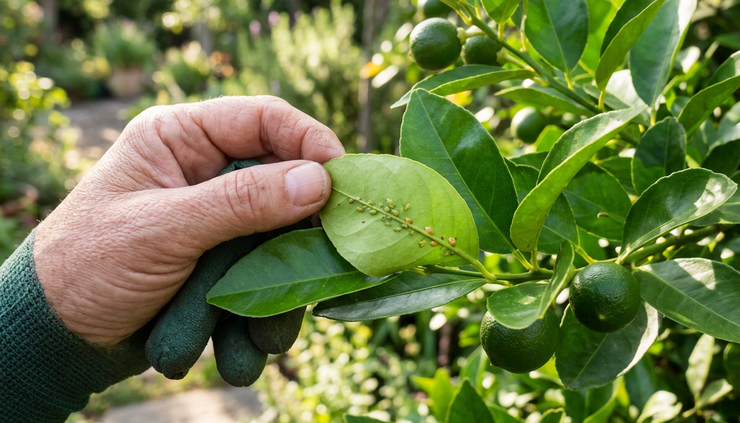
Check the tree once a week. Look under leaves, along soft new shoots, and near the trunk. Early pest control is easier and often needs gentler methods.
Common citrus pests and what to do
Problem | What you may see | Practical solution |
Aphids | Clusters on soft shoots, curled leaves, sticky honeydew | Spray with water, prune badly affected tips, use insecticidal soap if needed |
Scale insects | Small raised bumps on stems or leaves, sticky residue | Wipe off small colonies, prune crowded growth, use horticultural oil carefully |
Citrus leaf miner | Silvery winding trails in young leaves | Protect new flushes, remove badly affected young leaves, avoid excess nitrogen |
Mealybugs | White cottony clusters in leaf joints | Dab small patches with alcohol on cotton wool, encourage natural predators, use soap spray |
Mites | Speckled leaves, fine webbing in dry conditions | Increase humidity around potted plants, rinse leaves, avoid dusty stress |
Fruit flies | Stung fruit, larvae inside fruit | Collect fallen fruit, use suitable traps, harvest promptly |
Always read product labels before using any pesticide, even organic ones. Spray in the cool part of the day to reduce leaf burn and avoid harming pollinators. Do not spray open flowers if bees are active.
Deal with fungal and root problems early
Fungal problems often appear when air does not move through the canopy or when soil stays too wet. Root rot is especially serious because the first symptoms can look like hunger.
Watch for:
Yellowing leaves that do not improve after feeding
Wilting even when soil is moist
Dark, soft bark near the base
Dieback from branch tips
Mushrooms or sour smells in soggy soil
If drainage is the issue, reduce watering and improve the root environment. Pull mulch back from the trunk. For container trees, check that drainage holes are open and the potting mix has not collapsed into a dense mass.
For trees planted too deep, carefully remove excess soil from around the trunk until the root flare is visible. Do not scrape or wound the bark.
Understand yellow leaves
Yellow leaves are the most common citrus complaint. They are also the easiest symptom to misread.
Use the pattern as a clue:
Leaf pattern | Likely cause | What to check |
Older leaves turn pale | Nitrogen shortage | Feeding schedule and soil fertility |
Yellow leaves with green veins | Iron or magnesium issues | Soil pH, drainage, trace nutrient supply |
Whole tree yellows and drops leaves | Water stress or root damage | Soil moisture and drainage |
Yellow patches with pests present | Sap-sucking insects | Undersides of leaves and soft shoots |
Do not respond to every yellow leaf with more fertiliser. If roots are drowning, fertiliser will not fix the problem. Start with soil moisture and drainage, then consider nutrients.
Solve fruit drop and poor fruit quality
Some fruit drop is normal. Citrus trees often set more fruit than they can carry. Heavy drop becomes a concern when the tree is stressed.
Common causes include:
Irregular watering
Sudden dry spells
Too much nitrogen and not enough potassium
Pest damage
A very young tree
Poor root health
Keep moisture steady as fruit develops. Mulch helps. Feed with a balanced citrus fertiliser rather than pushing leafy growth with nitrogen-heavy feeds.
Dry fruit may come from heat stress, irregular watering, or fruit left on the tree too long. Thick peel can also occur when the tree gets too much nitrogen or not enough balance in feeding.
Protect citrus from harsh weather
Young citrus trees need protection from extremes. Strong wind can dry leaves and rock the root ball. Intense sun on newly exposed branches can cause sunburn. Cool weather can slow growth and make overwatering more likely.
In windy areas, plant near a permeable windbreak such as a hedge or fence that filters wind without blocking all airflow. For container trees, move pots to a sheltered sunny place during rough weather.
If pruning exposes large branches to sudden sun, leave some leaf cover where possible. Whitewashing exposed limbs with a suitable tree-safe whitewash can reduce sunburn risk in very hot areas.
Build a simple long-term routine for healthy growth
The best citrus care is regular but not fussy. A lime or lemon tree does not need daily interference. It needs observation, steady water, seasonal feeding, and small corrections before problems become serious.
Use this seasonal routine as a guide.
During active growth
When the tree is making new leaves, flowers, or fruit, it needs the most support.
Do these tasks:
Water deeply when the soil begins to dry
Feed according to the fertiliser label
Watch soft growth for aphids and leaf miner
Refresh mulch before hot dry periods
Remove weeds under the canopy
Train young branches gently if needed
New flushes of growth are tender and attractive to pests. Check them often. If they stay healthy, they become the leaves that feed future fruit.
During dry periods
Dry weather can reduce flowering, cause fruit drop, and weaken the tree. Containers may need much more frequent watering than trees in the ground.
Focus on:
Deep watering rather than light sprinkling
A wide mulch ring
Shade for black plastic pots that overheat
Early morning watering to reduce evaporation
Keeping grass and weeds away from the root zone
If water is limited, prioritise young trees and fruiting trees. A mature established citrus tree can handle short dry periods better than a newly planted one, but long dry stress will still affect fruit.
During rainy periods
Rain can be helpful, but too much water creates its own problems. Wet soil can lead to root disease, nutrient leaching, and weak growth.
During wet spells:
Stop scheduled watering
Check that water drains away from the trunk
Pull mulch back if the base stays too wet
Watch for fungal leaf spots
Avoid heavy fertilising before intense rain
For container trees, lift pots slightly on feet or bricks so water drains freely. Empty saucers after rain.
When the tree starts fruiting
Once the tree begins carrying crops, care becomes more rewarding. Harvest fruit regularly when it reaches useful size and flavour. Leaving too much mature fruit on the tree can slow new flowering in some cases and may attract pests.
Use clean secateurs for fruit that does not twist off easily. Pulling hard can tear small branches.
Taste is the best test. Limes are often harvested green when juicy. Lemons usually develop better flavour as they colour, though some varieties can be used before they are fully yellow.
Keep records if you enjoy learning from your garden. Note when the tree flowers, when fruit matures, when pests appear, and what feeding worked. Over time, this local knowledge becomes more useful than any general rule.
A simple care checklist
Here is an easy routine to keep nearby:
Check soil moisture twice a week while the tree is young
Water deeply when needed
Keep mulch wide but away from the trunk
Feed lightly during active growth
Prune dead, crossing, or crowded branches
Inspect new shoots for pests
Remove fallen fruit and diseased leaves
Protect the tree from waterlogging and strong wind
This routine does not take long. Ten careful minutes each week can prevent many of the problems that take months to fix.
Common challenges and quick fixes
Even well-cared-for citrus trees have difficult seasons. The key is to respond calmly and look for the cause before treating symptoms.
If a young tree stops growing, check the basics. Is it getting enough sun? Is the soil too wet or too dry? Was it planted too deep? Are weeds stealing water? Are ants farming aphids or scale insects on the shoots?
If leaves curl, look for pests first. Aphids and leaf miner often attack tender growth. If no pests are visible, check water stress and heat.
If a tree flowers but produces no fruit, it may be too young, underfed, short of water, or lacking pollinator visits. Give it time and improve growing conditions. Many citrus trees need to build size before they crop reliably.
If fruit is small, increase consistency. Small fruit often comes from heavy crop load, water stress, poor feeding, or a young root system. Thin some fruit on a small tree if the branches are overloaded.
If the tree looks weak after planting, reduce stress. Remove fruit, keep the soil evenly moist, avoid strong fertiliser until new growth appears, and protect it from wind. Transplant shock is common, but a properly planted tree can recover.

Growing lime and lemon trees is a practical garden project with a generous reward. Start with the right variety, plant it at the correct depth, give the roots well-drained soil, and build a simple care rhythm. The tree will tell you what it needs through its leaves, growth, flowers, and fruit.
A young citrus tree does not have to be perfect to thrive. It needs good light, patient care, and quick attention when something changes. Plant well, water wisely, feed steadily, and keep watch. Before long, those first home-grown limes or lemons will make the effort feel more than worthwhile.


Comments