

Essential Cat Nutrition Guide Protein Vitamins Minerals Homemade and Commercial Food Tips
Cats can look perfectly fine while their diet is slowly missing something important. A glossy coat, steady weight and good appetite are encouraging, but they do not always tell the whole story. Feline nutrition has strict rules because cats are obligate carnivores. Their bodies are built to use animal tissue well, and they rely on certain nutrients that dogs and humans can make for themselves.
A good cat diet is not just “meat in a bowl”. It needs the right balance of protein, fat, water, vitamins and minerals. It also needs safe ingredients, careful handling and the correct life-stage match. Kittens, pregnant cats, senior cats and cats with kidney, urinary or digestive issues may all need different feeding plans.
This guide explains the nutrients that matter most, how to choose quality ingredients, what to avoid, and how homemade food can fit in safely alongside commercial options. It is educational, not a replacement for veterinary advice. If a cat has a medical condition or you want to feed a fully homemade diet, work with a vet or veterinary nutritionist.

Cats need animal-based nutrition to thrive
A cat’s natural diet is rich in animal protein, moderate in fat and low in carbohydrate. That does not mean every cat must eat the same format of food, but it does mean the nutrient profile must respect feline biology.
Unlike omnivores, cats have a constant need for protein. Their bodies use amino acids every day for muscle repair, immune function, enzymes, hormones and healthy skin. Cats also need nutrients found naturally in animal tissues, such as taurine, arachidonic acid and preformed vitamin A.
A complete cat food should support these basics:
Steady lean body condition
Strong muscles
Healthy skin and coat
Clear eyes
Normal stool quality
Good hydration
Healthy teeth and gums
Strong immune function
Normal heart and vision function
The word complete matters. A complete and balanced food supplies all essential nutrients in the right amounts. A bowl of boiled chicken is not complete. Fish alone is not complete. Liver alone is not complete. These foods can be useful parts of a diet, but they cannot carry the whole nutritional load.
Life stage changes the design of the food
Cats do not need the same diet at every age.
Kittens need more energy, protein, calcium and phosphorus for growth. Adult cats need enough protein and calories to maintain weight without becoming overweight. Senior cats often still need high-quality protein, but their calorie requirement may drop if they become less active.
Pregnant and nursing cats need energy-dense food designed for reproduction or growth. Cats with kidney disease, urinary crystals, diabetes, food allergies or digestive problems may need therapeutic diets from a vet.
When designing animal feed for cats, start with the cat’s stage of life, health status and body condition. The best food on paper may still be wrong for the individual cat.
Protein is the foundation of feline health
Protein is the first nutrient to examine in any cat food. Cats need protein from sources that provide essential amino acids in usable forms. Animal proteins are usually the most suitable because they contain the amino acids cats need in the right pattern.
Good animal protein sources include:
Chicken
Turkey
Beef
Lamb
Rabbit
Fish
Eggs
Organ meats in controlled amounts
Plant proteins can appear in commercial cat foods, but they should not replace the need for high-quality animal protein. A food can look high in protein on the label while relying heavily on ingredients that are less ideal for cats.
Taurine is non-negotiable
Taurine is an amino acid-like nutrient that cats cannot produce in enough quantity. It supports heart function, vision, reproduction and immune health. Taurine occurs naturally in animal tissues, especially heart and dark meat.
A taurine deficiency can cause serious health problems over time. This is one reason homemade diets need professional formulation. Cooking, grinding and storage can affect nutrient levels, and simply adding meat does not guarantee enough taurine.
Commercial complete cat foods usually include added taurine. If a label does not clearly indicate that the food is complete and balanced for cats, treat it with caution.
Arginine and other amino acids matter too
Arginine helps cats process ammonia from protein metabolism. Cats are especially sensitive to arginine deficiency. Other amino acids, such as methionine and lysine, also support normal growth, tissue repair and immune health.
A well-designed cat food does not chase one nutrient alone. It gives the body a full amino acid profile from digestible protein sources.
Fat provides energy and essential fatty acids
Fat is not a filler. It gives cats concentrated energy and supports skin, coat, brain and hormone function. Cats also need essential fatty acids, including arachidonic acid, which is found in animal fats.
Omega-3 fatty acids from fish oil may support skin and joint health, but they must be used carefully. Too much fat can cause weight gain or digestive upset. Oils also go rancid if stored poorly.
Look for foods where fat comes from named, recognisable sources. Examples include chicken fat, fish oil or salmon oil. Be cautious with vague labels such as “animal fat” if the source is unclear.

Vitamins and minerals must be balanced, not guessed
Protein gets most of the attention, but vitamins and minerals decide whether a diet is truly safe for long-term feeding. Too little can cause deficiency. Too much can be toxic. The right balance matters as much as the ingredient list.
Key vitamins cats need
Cats need both fat-soluble and water-soluble vitamins.
Vitamin A
Cats need preformed vitamin A from animal sources. They cannot reliably convert beta-carotene from plants into active vitamin A the way some animals can. Liver is rich in vitamin A, but too much liver can create overdose risk.
Vitamin D
Vitamin D supports calcium and phosphorus balance, bone health and other body functions. Cats do not make enough vitamin D from sunlight, so it must come from food. Too much vitamin D can be dangerous, so supplements should not be added casually.
Vitamin E
Vitamin E helps protect cells from oxidative damage. It is especially relevant when diets contain fish oils or higher levels of polyunsaturated fats.
B vitamins
B vitamins help with energy metabolism, nerve function, skin health and appetite. Thiamine, also called vitamin B1, is especially important. Raw fish can contain enzymes that break down thiamine, and poorly balanced diets may be low in it.
Niacin
Cats require niacin from food. They cannot make enough from tryptophan, unlike some other species.
Key minerals cats need
Minerals are small in quantity but huge in effect.
Calcium and phosphorus
These minerals support bones, teeth, nerves and muscles. Meat is high in phosphorus but low in calcium. That is why plain meat diets cause problems over time. A homemade diet needs a safe calcium source in the correct ratio.
Magnesium
Magnesium supports many body functions, but excess levels may be a concern for some cats with urinary issues. The overall urine health picture also depends on moisture, pH and other nutrients.
Zinc and copper
These trace minerals support skin, coat, immune function and enzyme activity. Deficiency or excess can both cause harm.
Iodine
Iodine supports normal thyroid function. Too much or too little can be a problem, especially in older cats.
Sodium, potassium and chloride
These electrolytes help with hydration, nerve signals and muscle function. Cats with heart, kidney or digestive disease may need special control of these minerals.
Why balance is harder than it looks
A common homemade bowl might include chicken breast, rice and a little carrot. It may look clean and wholesome, but it is likely low in calcium, taurine, several trace minerals and some vitamins. Another bowl might be heavy in liver and fish. That can create excess vitamin A, excess iodine or an unbalanced fat profile.
This is why long-term cat food design needs formulation, not guesswork.
A helpful rule is simple: treat complete food as the base, and treats or extras as a small part of the daily intake. If toppers, snacks and human food additions become too large a share of the diet, they can unbalance the complete food.
Choosing high-quality ingredients starts with the label
A cat food label does not tell the whole story, but it gives useful clues. The best choice is not always the most expensive bag or tin. Look for clarity, quality control and suitability for the cat’s age and health.
What to look for in commercial cat food
Choose products that clearly state they are complete and balanced for cats. The label should match the life stage, such as kitten, adult maintenance, senior or all life stages. If a product is marked for intermittent or supplemental feeding only, it should not be the main diet.
Strong signs include:
Named animal protein sources, such as chicken, turkey, beef or salmon
A clear life-stage statement
Added taurine
A proper vitamin and mineral premix
Feeding guidelines based on weight and age
Manufacturer or importer details
Batch number and expiry date
Packaging that is sealed and undamaged
In Kenya, imported and locally available brands vary by shop, veterinary clinic and supermarket. Storage conditions matter in a warm climate. Avoid food from torn bags, dented tins, faded labels or open sacks that have been sitting exposed to heat, dust or insects.
Wet food, dry food and mixed feeding
There is no single format that suits every cat. Each has strengths.
Food type | Main benefit | Watch-out |
Wet food | High moisture content supports hydration | Can spoil quickly after opening |
Dry food | Convenient and easier to measure | Lower moisture and easy to overfeed |
Mixed feeding | Combines moisture and convenience | Portions must be controlled |
Veterinary diet | Designed for specific health needs | Should be used with vet guidance |
Wet food is useful for cats that do not drink much water. Dry food can work well when portions are measured and fresh water is always available. Mixed feeding gives variety, but it can also lead to overeating if the total daily calories are not calculated.
Ingredients that deserve caution
Avoid products or recipes that include ingredients known to be unsafe for cats.
Do not feed cats:
Onion
Garlic
Chives
Leeks
Chocolate
Alcohol
Caffeine
Grapes or raisins
Xylitol
Cooked bones
Very salty processed meats
Raw dough
Spoilt or mouldy food
Some ingredients are not toxic but still deserve limits. Tuna can be a tempting treat, but a tuna-heavy diet is not balanced. Milk often causes diarrhoea because many adult cats do not digest lactose well. Fatty leftovers can upset the stomach.
Additives and marketing claims need careful reading
Not every additive is bad. Vitamins, minerals, taurine and safe preservatives help make food complete and stable. The problem is vague or unnecessary additives, heavy colourings and products that rely more on marketing than nutrition.
Be careful with claims such as “natural”, “premium”, “holistic” or “human grade”. These words do not automatically mean the food is complete, safe or suitable. The more useful question is whether the food meets feline nutrient needs and comes from a manufacturer with good quality control.

Homemade cat food can help, but it must be complete
Homemade food appeals for good reasons. It gives control over ingredients, texture and freshness. It can also help cats with sensitivities when guided by a vet. Yet homemade cat food carries real risk when it is not balanced.
A safe homemade plan usually needs:
A veterinary-approved recipe
Accurate weighing of ingredients
A feline vitamin and mineral supplement or premix
Added taurine when required
Correct calcium and phosphorus balance
Safe cooking and storage
Regular weight and health checks
The recipes below are practical examples, but they are not all designed to be complete daily diets as written. Use toppers as small additions. For full-time homemade feeding, ask a vet to formulate or approve the recipe for the specific cat.
Simple chicken topper for occasional use
This is a short-term topper for cats that need encouragement to eat their complete food. It should not replace a complete diet.
Ingredients:
100 g cooked skinless chicken thigh or breast
1 to 2 tablespoons warm water
A small amount of the cat’s usual wet food gravy, if tolerated
Method:
Cook the chicken plain with no salt, onion, garlic or seasoning.
Chop it finely or shred it.
Add warm water to make it moist.
Serve a spoonful over complete cat food.
Use this for appetite support or variety, not as the main meal.
Balanced-style cooked chicken meal using a feline premix
This option shows the safer route for homemade feeding. The exact amount of premix must follow the product instructions. Different premixes have different directions.
Ingredients:
Boneless cooked chicken thigh meat
A small controlled amount of cooked chicken liver
Water or unsalted broth made without onion or garlic
Feline vitamin and mineral premix
Taurine if the premix or recipe requires it
Fish oil only if included in the approved recipe
Method:
Weigh the cooked meat and liver.
Let the food cool before adding heat-sensitive supplements.
Mix in the premix exactly as directed.
Add enough water for a soft, moist texture.
Portion into daily servings.
Refrigerate for short-term use or freeze portions safely.
This approach is much safer than copying a random recipe because the premix helps cover calcium, trace minerals and vitamins.
Egg and sardine treat meal for variety
This is an occasional treat, not a staple.
Ingredients:
1 cooked egg
1 small sardine in water, with no added salt if available
1 tablespoon warm water
Method:
Boil or scramble the egg without oil, salt or seasoning.
Mash a small amount with the sardine.
Add warm water.
Serve a small spoonful with the cat’s regular food.
Sardines can be rich, so keep portions small. Avoid fish packed in spicy sauces, brine or oil.
What about raw feeding?
Raw feeding has supporters, but it carries risks. Raw meat can contain bacteria and parasites. Bones can injure teeth or the digestive tract. Raw diets are also commonly unbalanced when made without expert formulation.
If raw feeding is being considered, discuss it with a vet first, especially if there are children, elderly people, pregnant people or immunocompromised people in the home. Hygiene matters for everyone who handles the food bowl.
For many homes, gently cooked complete homemade food is a safer option than raw.
Commercial options can be excellent when chosen well
Commercial cat food has one major advantage: reputable complete foods are formulated to meet known feline nutrient needs. That does not mean every product is equal, but it does mean a carefully chosen commercial diet can be a sound everyday choice.
How to build a sensible commercial feeding plan
Start with one complete food that matches the cat’s life stage. Feed the recommended amount, then adjust based on body condition. Cats vary in activity level, metabolism and appetite, so label guidelines are only a starting point.
A practical plan might look like this:
Wet food in the morning
Measured dry food later in the day
Fresh water available at all times
Small treats kept below a minor share of daily food
Weekly weight or body condition checks for cats prone to weight gain
If switching foods, change gradually over several days. Mix a small amount of the new food into the old food, then increase slowly. Sudden changes can cause diarrhoea or refusal.
Signs a food may not suit the cat
A food can be complete and still not suit every cat. Watch for changes after introducing a new diet.
Possible warning signs include:
Vomiting that continues
Loose stool or constipation
Itchy skin or overgrooming
Dull coat
Weight loss or fast weight gain
Refusal to eat
Excessive thirst or urination
Straining in the litter tray
Straining to urinate is urgent, especially in male cats. Seek veterinary help quickly.
Treats, toppers and extras should stay small
Treats help with bonding and training, but they can quietly unbalance a diet. A few bites of chicken or a small commercial treat is fine for many healthy cats. Large daily portions of extras are the problem.
Good treat choices include:
Tiny pieces of plain cooked chicken
Freeze-dried meat treats made for cats
Small amounts of complete wet food used as a reward
Commercial treats from reputable brands
Avoid using treats as the main source of affection. Play, grooming and quiet attention are calorie-free.
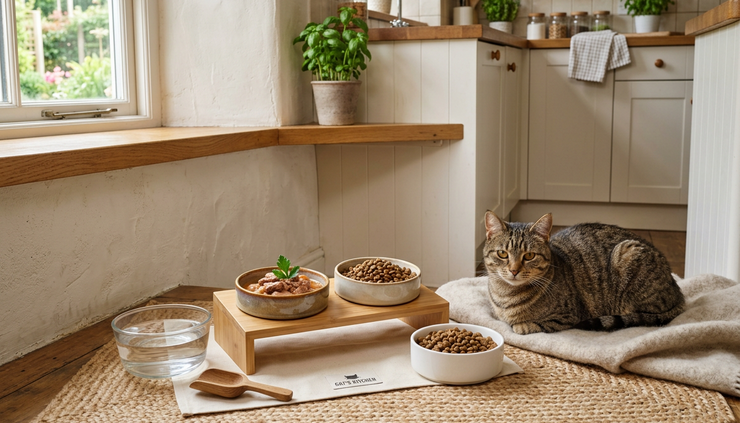
A simple checklist for better cat food decisions
Good cat nutrition becomes easier when each choice passes a few basic checks. Whether the food is homemade, commercial or a mix, the goal is the same: complete nourishment in a form the cat will eat and digest well.
Use this checklist before making a diet change.
The food matches the cat
Check age, weight, health status and activity level. Kittens need growth food. Cats with medical issues may need veterinary diets.
The diet is complete
For commercial food, read the label. For homemade food, use a veterinary-formulated recipe or feline premix.
The protein is suitable
Look for named animal proteins and enough digestible protein to maintain lean muscle.
The minerals are controlled
Do not rely on plain meat. Calcium, phosphorus, magnesium, iodine and trace minerals need careful balance.
The food supports hydration
Wet food, added water and clean water bowls can all help. Some cats prefer wide bowls, water fountains or bowls placed away from food.
The ingredients are safe
No onion, garlic, cooked bones, chocolate, alcohol, caffeine or spoilt food.
The portions are measured
Overfeeding is common, especially with dry food. Use a kitchen scale or measuring cup, then track body condition.
The cat accepts the diet
A perfect diet is useless if the cat will not eat it. Cats can develop serious problems if they stop eating for too long, so never force a sudden switch.
Body condition matters more than the bowl size
A cat at a healthy weight should have a visible waist from above and ribs that can be felt with light pressure but not sharply seen. A thick fat pad, round belly or disappearing waist can signal weight gain.
For overweight cats, do not crash diet. Cats need gradual, safe weight loss under guidance. Sudden severe calorie restriction can be dangerous.
Hydration deserves daily attention
Cats often have a low thirst drive. Wet food can help increase total water intake. Fresh water should be easy to access, clean and placed where the cat feels safe.
Some cats drink more when water is moving. Others prefer ceramic or stainless steel bowls. If a cat suddenly drinks much more than usual, schedule a vet check.
The best cat diet is consistent, complete and safe
Designing good cat food starts with respect for how cats are built. They need animal-based protein, essential amino acids such as taurine, the right fats, and a careful balance of vitamins and minerals. They also need clean water, safe ingredients and portions that match their body condition.
Homemade food can be useful, but it should not rely on guesswork. Use it as a topper unless a vet-approved complete recipe is in place. Commercial food can be a strong everyday option when it is complete, age-appropriate, fresh and clearly labelled.
The most practical next step is simple: look at the current food label, check whether it is complete for the cat’s life stage, measure the daily amount, and note the cat’s weight, stool quality, coat and energy over the next few weeks. Good nutrition is not about chasing trends. It is steady care, served one balanced meal at a time.


Comments