

Designing Optimal Goat and Sheep Feed for Healthier, Thriving Livestock
A goat can look lively while quietly losing condition. A sheep can stand in a full paddock and still miss key minerals. That is what makes feeding small ruminants both rewarding and tricky. Good feed is not just about filling the rumen. It is about giving the animal the right balance of energy, protein, fibre, vitamins, minerals, and water at the right time.
Goats and sheep are hardy animals, which is one reason they fit so well into Kenyan farms. They can turn grass, browse, crop residues, and by-products into milk, meat, manure, and breeding stock. Yet hardiness should not be confused with being able to thrive on poor feed. When rations fall short, the signs appear slowly: rough coats, low milk, weak kids and lambs, poor growth, reduced fertility, and frequent illness.
Designing strong goat and sheep feed starts with a simple idea: feed the rumen first, then feed the animal. When the rumen microbes are healthy, digestion improves, animals use nutrients better, and the whole flock or herd becomes easier to manage.

Goats and sheep need similar nutrients but in different ways
Goats and sheep are both ruminants, so they share many feeding needs. They rely on rumen microbes to break down fibrous feeds such as grass, hay, shrub leaves, and crop residues. That shared biology can make it tempting to feed them exactly the same ration.
That can work for basic forage feeding, but it becomes risky when minerals and production goals enter the picture.
Goats are natural browsers. They like leaves, shrubs, vines, seed pods, and a varied diet. They often do well when they can select from different plants. Sheep are natural grazers. They prefer grasses and low-growing leafy plants. They are generally more sensitive to sudden feed changes and some mineral imbalances, especially copper.
A good feeding plan respects those differences.
What every ration must provide
Every goat or sheep ration should cover six main needs.
Water
Water is the cheapest nutrient and often the most overlooked. Animals eat less when water is dirty, far away, or limited. Lactating does and ewes need more water because milk production draws heavily on body fluids.
Clean water should be available every day. In hot and dry areas, troughs may need refilling more than once. Where animals walk long distances to graze, water before and after grazing helps maintain intake.
Energy
Energy comes mainly from forage, grains, molasses, and some by-products. Animals need energy for movement, body warmth, pregnancy, milk, growth, and fat reserves.
A ration short of energy leads to weight loss, poor fertility, and weak young animals. Too much energy from grain can upset the rumen and lead to digestive problems. The safest base is always good roughage, then measured supplements where needed.
Protein
Protein supports growth, milk, pregnancy, muscle, immunity, and rumen microbes. Good protein sources include legume forages such as lucerne and desmodium, oilseed cakes, sunflower cake, cottonseed cake where suitable, and quality pasture.
Young stock, lactating females, and breeding males need more protein than dry adult animals at maintenance.
Fibre
Fibre keeps the rumen working. It encourages chewing, saliva production, and steady digestion. Long-stem forage such as hay, Napier grass, Rhodes grass, pasture, and browse should form the foundation of most diets.
Finely ground feeds may look neat in a bag, but they do not always support good rumen function. Animals still need enough physically effective fibre to chew.
Vitamins
Most healthy ruminants make many B vitamins in the rumen, but vitamins A, D, and E need attention.
Minerals
Minerals are needed in small amounts, but they carry big responsibility. They support bones, nerves, muscles, reproduction, immunity, wool or hair growth, and enzyme function. Mineral feeding is where goat and sheep diets often need the most care.
Key vitamins for goats and sheep
Vitamin | Why it matters | Common signs when low | Practical feed sources |
Vitamin A | Vision, immunity, fertility, healthy skin | Night blindness, rough coat, weak young animals | Green forage, good hay, leafy browse |
Vitamin D | Bone growth and calcium use | Weak bones, poor growth, stiffness | Sunlight, sun-cured hay, supplements where needed |
Vitamin E | Immunity, muscle health, reproduction | Weak young stock, poor immunity | Fresh green forage, quality oils in small amounts, mineral-vitamin premixes |
B vitamins | Energy use and nerve function | Usually linked to rumen upset rather than simple shortage | Healthy rumen fermentation |
Vitamin K | Blood clotting | Rare in normal feeding | Green feeds and rumen microbes |
Vitamin A is one of the first to fall when animals spend long periods on dry, weathered roughage. During drought or when feeding old hay and maize stover, green forage or a reliable premix becomes more useful.
Vitamin D is usually adequate when animals get sunlight, but housed animals or young animals kept indoors for long periods may need closer attention.
Vitamin E works closely with selenium. Fresh green forage is a good source, but levels drop as forage dries and is stored for long periods.
Minerals that deserve close attention
Minerals fall into two groups. Macro-minerals are needed in larger amounts. Trace minerals are needed in tiny amounts but are still essential.
Mineral | Main role | Feeding notes |
Calcium | Bones, milk, muscle function | High demand in lactation and late pregnancy |
Phosphorus | Bones, energy use, fertility | Often low in mature grasses and crop residues |
Salt | Appetite, fluid balance, nerve function | Provide free-choice salt or mineral lick |
Magnesium | Nerve and muscle function | Important on lush pasture and for lactating animals |
Sulphur | Wool, hair, rumen microbes | Usually supplied through protein feeds |
Copper | Blood, coat colour, immunity, fertility | Goats need it, sheep are sensitive to excess |
Selenium | Immunity, muscle health, reproduction | Needed in small amounts, excess can be harmful |
Zinc | Skin, hooves, immunity | Supports strong hooves and healthy coats |
Iodine | Thyroid function, growth | Shortage can affect newborn vigour |
Cobalt | Vitamin B12 production in the rumen | Supports appetite and energy use |
Copper needs special mention. Do not assume a goat mineral mix is safe for sheep. Goats generally tolerate and require more copper than sheep. Sheep can suffer copper toxicity when fed high-copper supplements over time. If goats and sheep share the same feeding area, choose minerals carefully and seek local veterinary or animal nutrition advice before using copper-rich products.
Calcium and phosphorus also need balance. Legume hay can be high in calcium, while grain and some brans can be relatively high in phosphorus. Young growing stock and lactating animals need both, not just one.
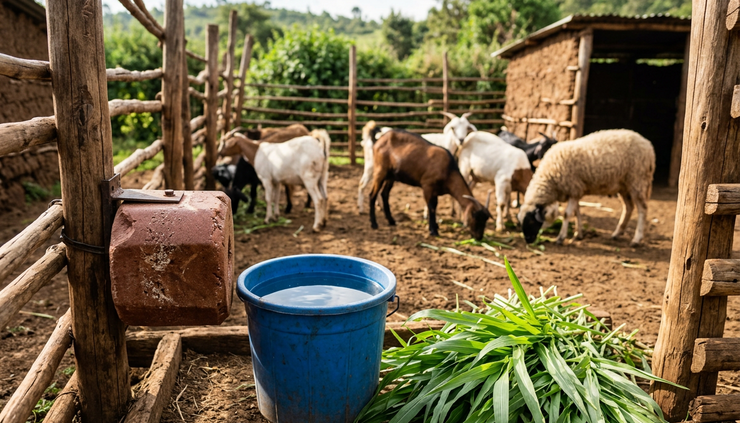
High-quality ingredients make balanced rations easier
A balanced ration starts long before mixing day. It begins with the quality of hay, pasture, browse, grains, and purchased ingredients.
Poor ingredients are expensive even when the bag price looks low. Mouldy bran, dusty hay, damp maize germ, or old oilseed cake can reduce intake and invite disease. Good ingredients smell fresh, feel right, and match the animals’ needs.
Build the ration from forage first
Forage should usually form the largest part of the diet. It is the safest and most natural feed base for both goats and sheep.
Good forage options in many Kenyan systems include:
Napier grass cut at a leafy stage
Rhodes grass hay
Kikuyu grass where available and well managed
Boma Rhodes hay
Lucerne hay
Desmodium
Sweet potato vines
Cowpea vines
Calliandra and leucaena leaves in controlled amounts
Maize stover treated or improved with better protein sources
Natural pasture, especially when grazed before it becomes too mature
Leafy forage has more protein and digestible energy than stemmy, overgrown forage. Cut Napier grass before it becomes hard and fibrous. Hay should be dry, greenish rather than grey, and free from mould.
A farmer in Nakuru once described a simple change that lifted the condition of her sheep flock. She had been feeding plenty of hay, but most of it was old and stemmy. After she began buying smaller amounts of greener hay and mixing it with sweet potato vines, the sheep started finishing their trough feed more consistently. She did not make the ration complicated. She improved the base.
That is often where the biggest gains come from.
Use concentrates with a clear purpose
Concentrates include grains, brans, oilseed cakes, commercial pellets, and energy-rich by-products. They are useful when forage alone cannot meet the needs of lactating, growing, pregnant, or finishing animals.
Common concentrate ingredients may include:
Maize germ
Maize bran
Wheat bran
Pollard
Sunflower cake
Cottonseed cake, used carefully and from a reliable source
Soybean meal where available
Brewers’ grain, especially when fresh and well handled
Molasses in small amounts to improve taste and reduce dust
Commercial goat or sheep pellets
Concentrates should not replace roughage. Too much grain too quickly can cause acidosis, bloat, diarrhoea, and sudden drops in appetite. Introduce concentrates gradually over 7 to 14 days, especially after drought, illness, transport, or weaning.
A practical approach is to reserve concentrates for animals that pay back the extra feed:
Lactating does and ewes
Late-pregnant females
Fast-growing kids and lambs
Breeding males before and during mating
Thin animals recovering condition
Animals being finished for market
Dry adult animals in good condition may need only pasture, hay, browse, water, and minerals.
Check ingredient quality before buying
Use your eyes, nose, and hands before accepting feed.
Good feed should:
Smell fresh, not sour, musty, or rotten
Feel dry, not damp or caked
Be free from visible mould
Have little soil, stones, plastic, or foreign material
Show no signs of insect infestation
Match what the seller claims it is
Have consistent texture from bag to bag
For hay, open a bale before buying many bales. Good hay should have leaves, not only stems. It should not release a cloud of dust when shaken. Dusty hay often reduces intake and can irritate the respiratory system.
For commercial feeds, check the label. Look for the intended species, crude protein level, mineral content, manufacturing date, and storage instructions. Choose feeds made for goats or sheep where possible. If feeding sheep, be especially careful with copper levels.
Store feed as carefully as you buy it
Feed loses value when stored badly. Keep bags off the floor on pallets or wooden slats. Leave space between stacks and the wall so air can move. Keep the store dry, roofed, and protected from rodents and poultry.
Use older feed first. Label or arrange bags by purchase date. Avoid storing wet by-products for long unless they are properly preserved. Spoiled feed can harm animals and waste money.
Balanced rations match the animal’s stage of life
There is no single best ration for all goats and sheep. The right ration depends on age, body condition, breed, production stage, weather, available pasture, and farm goals.
Rather than chasing a perfect formula, aim for a ration that is consistent, digestible, and suited to the animal’s job.
Maintenance animals need steady, simple feeding
Dry adult goats and sheep that are not pregnant, lactating, growing, or being fattened can do well on good forage, clean water, and a suitable mineral supplement.
They still need observation. If body condition drops, the diet is not meeting needs. If animals become too fat, especially breeding females, reduce high-energy supplements and encourage movement.
Body condition scoring is more useful than guessing by eye. Feel over the ribs, spine, and loin. Hair or wool can hide both thinness and fatness.
Breeding females need support before mating
Good fertility begins before mating. Females that are too thin may cycle poorly or conceive fewer offspring. Females that are too fat can face kidding or lambing problems.
Many farmers use flushing, which means giving better feed for a short period before and during mating. This can include improved pasture, legume forage, or a modest amount of concentrate. The goal is to improve body condition and ovulation, not to make animals fat.
In one composite case from a semi-arid mixed farm, a group of does had low conception after a dry season. The farmer changed three things before the next breeding period. He separated thin does, gave them priority access to leafy browse and a small evening concentrate, and provided a goat mineral mix with clean water near the night pen. The next kidding season was more even, and the farmer found it easier to manage newborn care because the does were in better condition.
The lesson is simple: breeding success often starts weeks before the buck or ram enters the group.
Late pregnancy calls for more care
Most foetal growth happens in the final weeks of pregnancy. At the same time, the growing uterus reduces space in the abdomen, so females may not manage bulky, low-quality forage well.
Late-pregnant does and ewes need:
Good-quality roughage
Enough protein
Moderate energy support
Clean water
Correct minerals
Calm feeding space
Avoid sudden feed changes near kidding or lambing. Introduce any extra concentrate slowly. Overfeeding grain can cause digestive upset, while underfeeding can lead to weak newborns and poor milk start.
Separate heavily pregnant females from aggressive animals so they can eat peacefully.
Lactating animals need the best feed on the farm
Milk takes nutrients every day. A lactating dairy goat, meat doe with twins, or ewe nursing strong lambs needs more energy, protein, calcium, phosphorus, and water than a dry animal.
Give lactating females first access to quality forage. Add concentrates based on milk level, number of young, and body condition. Offer minerals daily. Watch the dung. Very loose dung may point to too much rich feed or sudden changes, while hard dry pellets may suggest low water intake, poor forage, or limited feed.
For dairy goats, feed after milking can help keep animals calm and support intake. Keep the routine predictable.
Young stock need clean feed and gradual changes
Kids and lambs depend on colostrum soon after birth. After that, they begin nibbling forage, concentrates, and minerals as the rumen develops.
Creep feeding can help fast-growing young animals, especially where mothers have low milk or where twins and triplets compete. A creep area lets young animals access feed that adults cannot reach.
A good creep feed is fresh, palatable, and not dusty. Offer small amounts at first and clean leftovers often. Young animals are sensitive to stale feed.
Weaning should be gradual where possible. Sudden weaning combined with a sudden feed change can set back growth.

Feeding schedules and methods can improve digestion
What animals eat matters. How they eat also matters.
Ruminants do best with steady routines. Big swings in feed type, feeding time, or concentrate amount can disturb rumen microbes. A good schedule reduces stress, improves intake, and makes it easier to spot problems early.
Keep feeding times predictable
Feed at similar times each day. Animals quickly learn the routine, and regular feeding supports stable rumen activity.
A simple zero-grazing or semi-zero-grazing schedule may look like this:
Time | Feeding activity | Why it helps |
Early morning | Offer water, minerals, and part of the roughage | Encourages rumen fill before concentrates |
After milking or morning check | Give measured concentrate to animals that need it | Supports lactation, growth, or recovery |
Midday | Provide fresh forage or allow grazing and browsing | Keeps fibre intake steady |
Late afternoon | Offer the remaining forage and clean water | Supports overnight rumination |
Evening | Check leftovers and animal behaviour | Helps catch sickness or low appetite early |
Farmers who graze animals during the day can still use a routine. Provide water before leaving and when animals return. Offer hay or cut forage in the evening if pasture is short. Give supplements to target groups rather than the whole flock if only some animals need them.
Feed roughage before concentrates
Giving roughage before grain helps prepare the rumen. Animals chew forage, produce saliva, and buffer the rumen. This lowers the risk of digestive upset when concentrates are fed.
If animals rush grain, spread it in a long trough so timid animals get a fair chance. Avoid dumping concentrate in one small spot. Dominant animals may overeat, while weaker animals get little.
Chop forage but do not make it too fine
Chopping forage reduces waste, especially with Napier grass, maize stover, and vines. Pieces that are too long may be dragged around and trampled. Pieces that are too fine may reduce chewing.
For many small ruminants, short chopped forage is practical. Mix dry and green material if needed. If feeding molasses, dilute and sprinkle lightly rather than pouring large sticky amounts that cause clumping.
Make changes slowly
The rumen needs time to adapt. This matters when moving from dry-season roughage to lush pasture, introducing grain, changing brands of commercial feed, or adding by-products.
A safe transition plan:
Start with a small amount of the new feed
Mix it with the old feed
Increase gradually over several days
Watch dung, appetite, and behaviour
Slow down if animals scour, bloat, or refuse feed
Sudden access to lush legumes or wet young pasture can raise the risk of bloat. Introduce such feeds carefully and avoid turning hungry animals directly onto risky pasture.
Reduce feed competition
Feeding space affects nutrition more than many farmers realise. If trough space is short, strong animals eat first and weaker animals live on leftovers. This creates uneven growth and poor reproductive performance.
Good feeding management includes:
Enough trough length for the group
Separate feeding for young, weak, sick, or late-pregnant animals
Grouping animals by size and stage where possible
Raising troughs slightly to reduce contamination
Cleaning troughs before old feed spoils
One sheep producer in Laikipia improved lamb growth without changing the feed formula. The main change was group feeding. Ewes with twins were separated from dry ewes, and lambs received creep feed in a small protected space. Before that, the flock looked well fed as a group, but the animals with the highest needs were losing out at the trough. Once feed matched need and access improved, the flock became more even.
Use grazing and browsing with purpose
Goats benefit from browsing shrubs and hedges, but not every plant is safe or suitable. Sheep benefit from good pasture, but overgrazed pasture provides little nutrition and increases parasite exposure.
Rotational grazing can help pasture recover and reduce parasite pressure. Even simple rotation between paddocks or controlled tethering areas can improve feed use.
Avoid grazing too low. Very short grazing forces animals to eat close to the soil, where parasite larvae are more likely to be found. Leave enough leaf for regrowth.
Browse trees and fodder shrubs can help during dry periods. Use them as part of the ration, not as an uncontrolled replacement for everything else. Some tree leaves are rich and should be introduced gradually.
Practical ration examples for common farm situations
These examples are not fixed formulas. They show how to think through rations using feeds many Kenyan farmers may recognise. Exact amounts should change based on body weight, breed, pasture quality, production level, and local advice.
The safest pattern is:
Start with forage.
Add protein where forage is weak.
Add energy where body condition or production demands it.
Supply minerals and salt.
Watch the animal and adjust.
Dry adult goats on mixed browse and hay
A simple ration can include daytime browsing, Rhodes grass hay in the evening, a small amount of legume forage several times a week, free-choice goat mineral, salt, and clean water.
If the goats hold condition, no concentrate may be needed. If they lose weight during the dry season, add a small measured supplement in the evening and improve forage quality first.
Lactating dairy goats in a cut and carry system
The best animals should receive the best feed. A dairy doe may need high-quality Napier grass cut at a leafy stage, lucerne or desmodium, clean water at all times, and a measured dairy goat concentrate during milking.
Feed should be split into several meals. Large single meals can lead to sorting, waste, and digestive stress. Watch body condition as well as milk. If milk is high but the doe is losing weight, the ration may need more energy or better intake.
Ewes with lambs on pasture
Ewes nursing lambs need good pasture or hay, mineral suitable for sheep, and extra feed if pasture is short. If copper levels are unknown, avoid goat minerals and cattle minerals unless advised by a professional.
Twin-bearing or twin-rearing ewes may need better feed than single-rearing ewes. Separate them if possible. Lambs can be offered creep feed in small amounts to support growth.
Growing kids and lambs after weaning
Weaned young stock need good forage, a suitable grower supplement, clean water, and minerals. Keep the diet steady during weaning. Avoid mixing very small animals with large aggressive ones.
Growth should be steady, not forced. Overfeeding grain may create digestive problems. Underfeeding protein can slow frame development and delay maturity.
Breeding bucks and rams
Breeding males should be fit, active, and neither thin nor overfat. Before the breeding season, improve forage and add modest concentrate if body condition is low. Minerals matter for fertility, hoof strength, and stamina.
Do not wait until mating starts to improve feed. Build condition gradually.

Small checks prevent big feeding problems
Good feeding is not a one-time formula. It is a cycle of feeding, watching, and adjusting.
Walk through the animals daily if possible. Look for changes before they become serious.
Signs that the ration may need attention include:
Falling body condition
Dull coat or wool
Reduced appetite
Loose dung or very dry dung
Bloat or discomfort after feeding
Slow growth in young animals
Poor milk yield
Weak newborns
Chewing wood, soil, or unusual objects
Uneven animals within the same group
Keep simple records. Write down breeding dates, kidding and lambing dates, feed changes, deworming, illness, deaths, and unusual weather. A notebook near the feed store can reveal patterns that memory misses.
If many animals show the same problem, look at the system. Check feed quality, mineral access, water, parasites, disease, and housing. Nutrition works together with health management. Good feed cannot fully overcome heavy parasite burdens, dirty housing, or poor water.
Work with local advice when needed
Soils and forages vary by region. Some areas have mineral shortages or excesses. Some by-products change in quality from one supplier to another. Where possible, use local extension officers, veterinarians, and animal nutritionists to check rations, especially for breeding flocks, dairy goats, and fast-growing meat animals.
Laboratory feed testing is useful when buying large amounts of hay, silage, or mixed feed. If testing is not available, careful observation still helps. Animals are honest reporters. Their appetite, dung, coat, milk, growth, and fertility show whether the ration is working.
A simple feeding mindset that works
The most successful goat and sheep farmers tend to follow a few steady habits.
They do not rely on one feed for everything. They combine pasture, hay, browse, legumes, and measured supplements.
They protect the rumen. They avoid sudden changes and keep fibre in the ration.
They separate animals by need when they can. Lactating, pregnant, young, weak, and finishing animals receive more attention than dry adults at maintenance.
They respect minerals. They do not feed goat minerals to sheep without checking copper.
They watch animals daily. A half-empty trough, a slow animal, or a change in dung gets noticed early.
One practical farmer put it well after improving a mixed herd through better forage and mineral feeding: “The animals told me before the records did.” The coats shone, the young ones played more, and the females came to the trough with stronger appetite. Records later confirmed what the eye had already seen.
Good feed design is not about making rations complicated. It is about making them suitable, steady, and clean.
Start with the best forage you can provide. Add concentrates only where they serve a clear purpose. Choose minerals for the right species. Feed on a routine. Give clean water every day. Then watch the animals closely and adjust before small gaps become costly problems.
Healthy goats and sheep reward that care with better growth, stronger young, improved milk, and calmer management. The feed trough is one of the best places to build a thriving flock or herd, one balanced meal at a time.


Comments